
The gaming industry is one of the most exciting creative fields today, offering countless opportunities for artists who love designing characters, environments, and immersive digital worlds. If you enjoy drawing, digital art, or 3D modeling, becoming a video game artist can be a rewarding career that combines creativity with technology.
A video game artist is responsible for the visual style and appearance of a game. They create concept art, characters, environments, textures, and animations that define the look and feel of the gaming experience. Game artists often work closely with game designers and developers to ensure that the visuals match the gameplay and storytelling.
Develop Your Artistic and Technical Skills
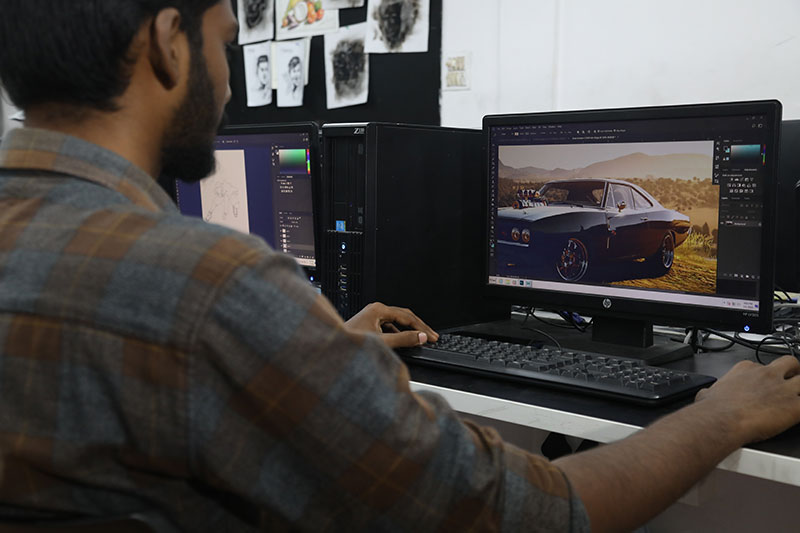
To become a successful video game artist, you need strong artistic fundamentals such as anatomy, character design, color theory and composition. At the same time, learning digital tools is essential. Software such as Photoshop, Blender, Maya, and game engines are widely used in the industry to create and refine game assets.
Understanding 2D and 3D art, digital sculpting, texturing, and animation can help aspiring artists build the skills needed to create professional-quality game visuals.
Learn Through Professional Education
While self-learning can help build basic skills, professional training provides structured learning and industry exposure. As a pioneer in creative education with over 21 years of excellence, ICAT College of Design and Media offers specialized degree programs in Game Art and Design that prepare students for careers in the gaming industry.
At ICAT College, students gain hands-on experience with industry-standard tools, learn the full game art production pipeline, and work on real-world projects. The curriculum focuses on character design, environment creation, 3D modeling, texturing, and animation, helping students build strong creative and technical foundations.
Building a Studio-Ready Portfolio
In the gaming industry, a strong portfolio is essential. Aspiring game artists should create character designs, environment concepts, 3D models, and game-ready assets that demonstrate their skills. A well-developed portfolio can help students secure internships and job opportunities in gaming studios and interactive media companies.
Career Opportunities in Game Art
A career in game art opens doors to multiple roles, including Character Artist, Environment Artist, Texture Artist, 3D Modeler, and Lighting Artist. With the global gaming industry expanding rapidly, skilled game artists are in high demand across studios, media companies, and even emerging fields like virtual reality and augmented reality.
ICAT's greatest pride is its network of thousands of alumni working in top positions globally, further supporting students in finding opportunities and building successful careers worldwide.
Conclusion
Becoming a video game artist requires creativity, technical skills, and the right guidance. With professional training, hands-on projects, and industry exposure, ICAT College of Design and Media helps aspiring artists transform their passion for art and gaming into successful careers in the global gaming industry.