
How AI-Assisted Animation is Transforming the Animation Workflow (Without Replacing Artists)
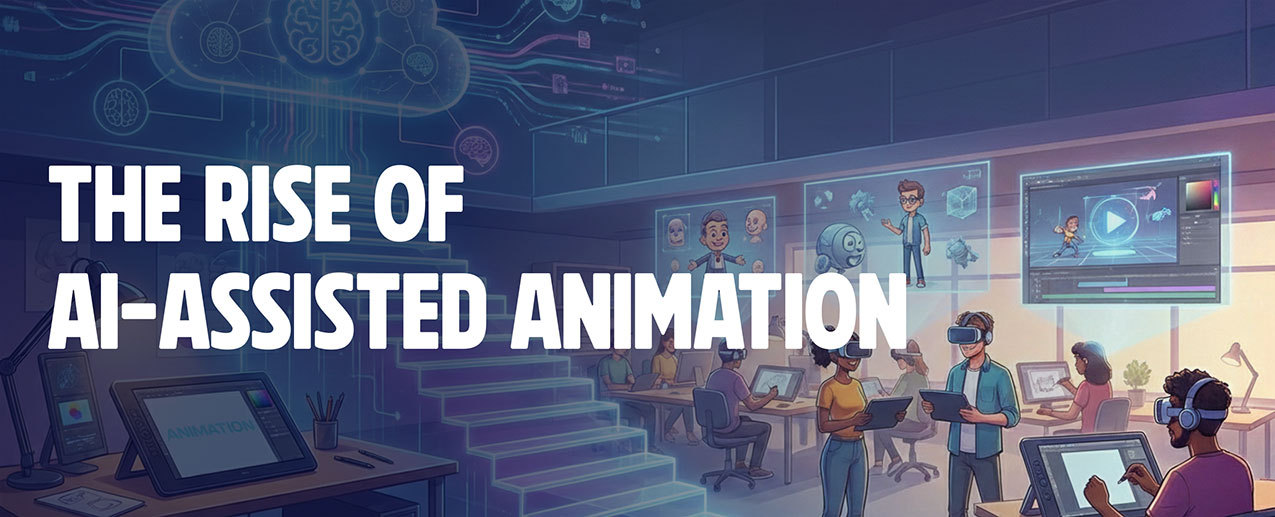
AI has quickly made its way into the world of animation. It's not meant to replace artists, but to help them work faster, be more creative, and explore new ideas. In 2026, studios and independent creators are using AI-powered tools to do boring tasks. This lets animators focus on acting, storytelling, and making the visuals look good.
Here's a clear look at how AI is changing animation and why artists are still very important.
1. Faster Pre-Production Through AI Storyboarding
Storyboarding is one of the most time-consuming phases in animation.
Now, artists can use AI-powered tools to:
- Make rough panels from scripts
- Block camera angles faster
- Experiment with pacing and shot choices
- Explore multiple visual interpretations
These AI drafts save time, but artists still work on poses, expressions, and timing, which are the most important parts of telling a story.
2. AI Clean-Up & Inbetweening Tools
Inbetweening can take hours for 2D animators. AI tools now help in the following ways:
- Generating inbetweens automatically based on keyframes
- Smoothing animations
- Cleaning rough lines
This speeds up production, especially for TV shows, web series, and marketing materials.
Then, artists change the weight, arcs, and acting details—things that AI can't get right.
3. Motion Capture + AI for Better Character Acting
Motion capture the old-fashioned way costs a lot and takes a lot of resources. AI-enhanced systems now allow:
- Mocap from a regular camera or phone
- AI refinement of body mechanics
- Automatic retargeting to stylized characters
This helps animators tackle complex acting shots while still polishing exaggerated movements that give animation its unique charm.
4. AI for Lip-Sync and Voice-Driven Animation
Automatically syncing dialogue to mouth shapes used to be a lengthy process.
AI tools can now:
- Map phonemes to animation in seconds
- Suggest facial expressions that match tone
- Speed up dubbing for multilingual content
Animators still refine the emotional beats — AI handles only the mechanical part.
5. Background Generation and Style Exploration
AI is particularly helpful in visual development and layout creation:
- Creating rough backgrounds based on style prompts
- Exploring different lighting moods
- Generating variations of environments
- Helping artists iterate faster
These outputs are treated as drafts, not finals. Artists still paint, refine and stylize the results to achieve true visual cohesion.
6. Why AI Can’t Replace Animators
Despite rapid progress, AI cannot replace what makes animation special:
- Acting choices
- Comedic timing
- Emotional nuance
- Character appeal
- World-building
- Cinematic sense
Animation relies heavily on intent and interpretation — qualities rooted in human creativity.
AI assists the process, but the vision is always driven by artists.
7. What This Means for Animation Students in 2026
Students entering the animation industry should learn both:
| Traditional Skills | New-Age AI Skills |
|---|---|
| Drawing fundamentals | AI pre-vis tools |
| Character acting | AI-assisted inbetweening |
| Timing concepts | Motion capture refinement |
| Storyboarding | Style-transfer tools |
| Cinematic language | AI-supported lip-sync systems |
The animator of 2026 is not competing with AI — they are using it to produce higher-quality work in less time.
Final Thoughts: AI is a Tool! Not a Threat!
AI-assisted animation is changing the way things are done, making production faster, easier, and more accessible. But the most important parts of animation, like emotion, storytelling, and making creative choices, are still done by people.
People who combine artistic skill with smart tools will have a bright future, whether they are students or professionals.