
Explore "Futuristic Metallic," a fashion editorial photography project blending technology, metallic aesthetics, and human identity by an ICAT student.
Introduction
As a final year Photography student at ICAT College of Design & Media, I wanted to explore a concept that reflects the evolving relationship between humans and technology.
We are living in a time where artificial intelligence, digital environments, and technological innovation are becoming deeply integrated into our daily lives. This inspired my project, "Futuristic Metallic," an editorial fashion photography series that explores futuristic aesthetics through metallic textures, reflective materials, and dramatic lighting.
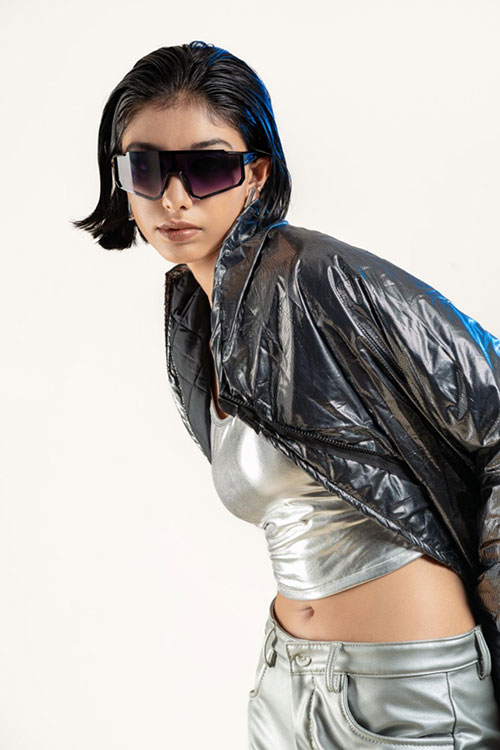
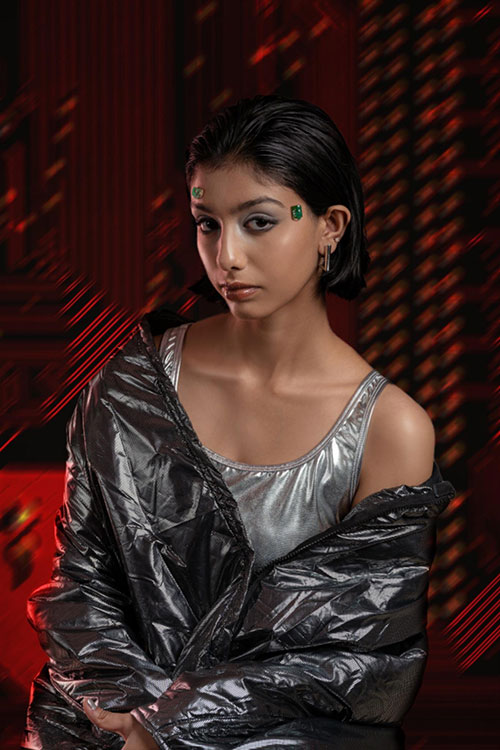
At its core, the project also highlights a deeper idea, while technology continues to evolve, human qualities such as emotion, intuition, and individuality remain irreplaceable.
Concept and Inspiration
The concept imagines fashion in a technologically advanced future. Metallic textures and reflective surfaces were used to represent machinery, robotics, and innovation. At the same time, the project explores the contrast between artificial systems and human presence.
While artificial intelligence can replicate patterns and visuals, it cannot fully recreate human emotion or individuality. Through this series, I aimed to create a subtle tension between the mechanical and the human.
Editorial Fashion Approach
This project follows an editorial fashion photography style where storytelling is as important as aesthetics.
Instead of complex sets, I chose a minimal visual approach. A clean background allowed the metallic textures, lighting, and model presence to stand out.
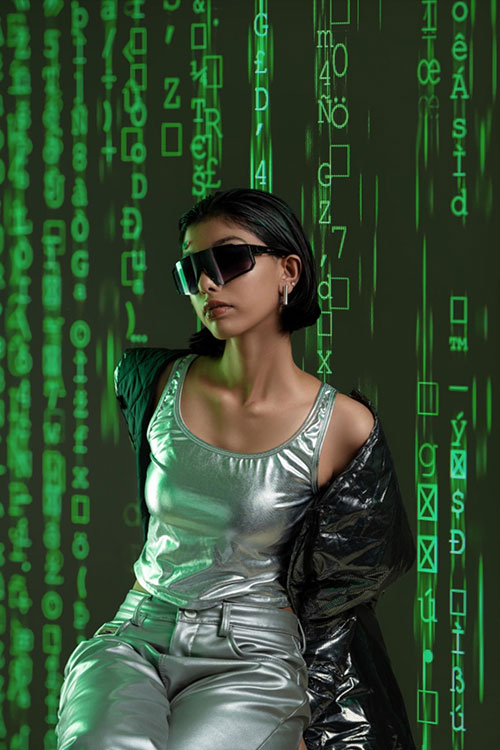
Futuristic goggles and minimal styling elements were used to enhance the theme without overpowering the composition. This simplicity helped create a sense of space and a futuristic atmosphere.
Studio Setup and Equipment
The shoot was conducted in the studio at ICAT College of Design and Media, which provided full control over lighting and composition.
I used a Canon EOS 6D Mark II along with:
- 85mm lens for sharp portraits and subject isolation
- 50mm lens for wider fashion compositions
These lenses helped maintain natural proportions while highlighting both facial details and outfit styling.
Lighting and Visual Style
Lighting played a crucial role in defining the futuristic metallic look.
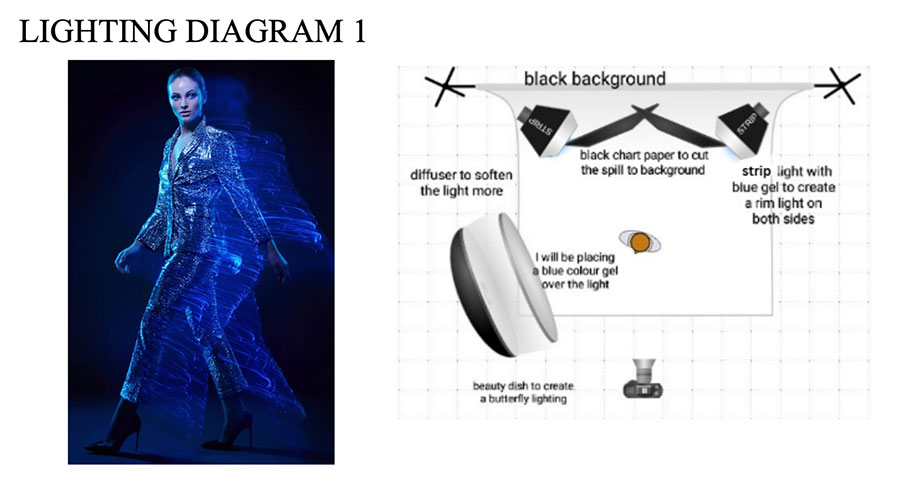
I used:
- Stripbox
- Beauty dish
- Bowl reflector
- Diffusers and scrims
- V-flats and cutter boards
- Projector for digital backgrounds
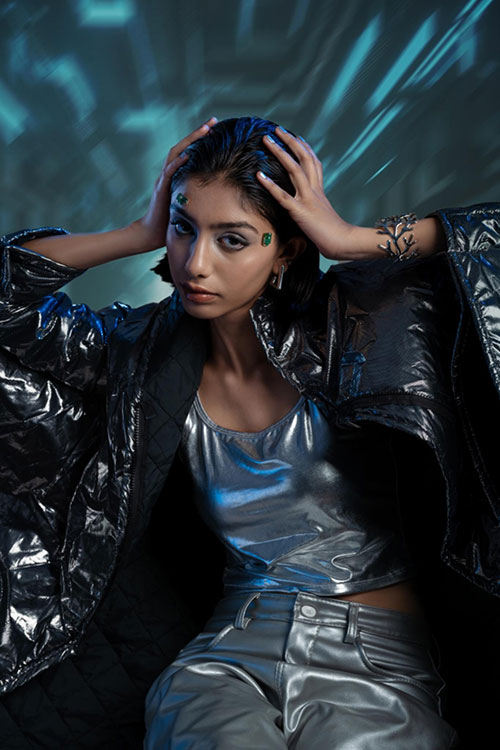
The beauty dish created sharp highlights on metallic textures, while diffusers softened reflections. The stripbox helped shape light and emphasize the structure of the garments.
Cool blue tones were maintained throughout the images to evoke a technological and digital environment.
Styling and Makeup Details
One of the most interesting aspects of the shoot was the makeup concept. In addition to muted nude makeup with a slightly plastic-like finish, we added a small but significant detail to strengthen the futuristic theme.
During the makeup process, we carefully attached small PCB (printed circuit board) chips onto the model’s face. These tiny electronic components were used as design elements to make the model appear slightly robotic, as if human skin and technology were merging together.
This detail added a strong visual metaphor to the images, suggesting a future where humans and machines may become increasingly interconnected.
The makeup, combined with the metallic outfits and futuristic goggles, helped create a unique aesthetic that felt both human and artificial at the same time.
Model Direction and Mood
Another important decision in the project was directing the model to maintain neutral expressions without smiling or displaying strong emotions. I wanted the model to appear calm, composed, and slightly detached.
This expressionless approach helped create the impression of a futuristic or robotic presence. At the same time, the subtle body language and posture still revealed a human element, reinforcing the conceptual contrast between artificial systems and human individuality.
To further support the futuristic atmosphere, I maintained a cool colour temperature throughout the images, particularly using shades of blue. Blue tones often evoke feelings of technology, digital interfaces, and cold mechanical environments, which perfectly complemented the theme of the project.
Collaboration and Support
This project was made possible through the support and collaboration of models, a fashion designer, and my mentors. I am grateful to my professors and friends for their guidance and creative inputs throughout the process.
The project was presented at the ICAT College Graduation Showcase, where it received valuable feedback from peers, faculty, and industry professionals. This experience helped me understand audience engagement and reinforced the importance of teamwork, storytelling, and presentation in photography.
Final Outcome
The final outcome is a series of 12 editorial fashion photographs that explore the intersection of fashion, technology, and identity.
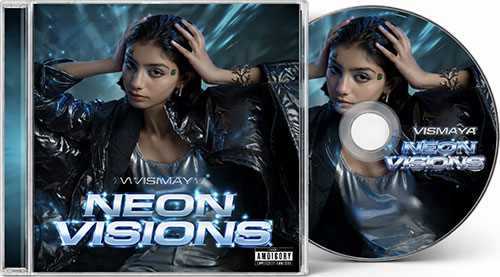
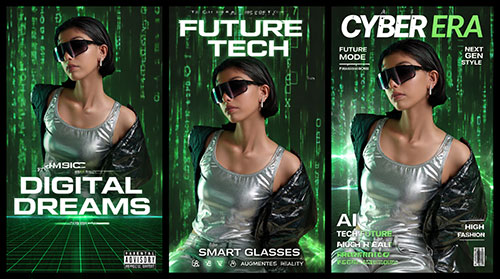
The images combine metallic textures, controlled studio lighting, minimal styling, and futuristic makeup elements to create a visual narrative that feels experimental and forward-looking.
These images could potentially be used in various creative industries such as music promotions, album covers, fashion editorials, advertising for tech brands, exhibitions, and creative stock photography platforms where futuristic imagery is often in demand.
Conclusion
Working on Futuristic Metallic was an exciting and challenging experience. It pushed me to experiment with lighting, conceptual storytelling, and collaborative creativity. More importantly, it allowed me to explore how photography can communicate ideas about the future and the role of technology in our lives.
Through this project, I wanted to create images that not only look futuristic but also encourage viewers to think about the relationship between humans and machines. No matter how advanced technology becomes, there will always be something uniquely human that cannot be completely replicated.
Explore more student project blogs to see how innovative ideas are brought to life.