
A Real Question Every Animation Student Dreads & Asks
If you walk into any animation classroom, especially on the first day of a 3D animation course, there's always one hesitant question that quietly floats across the room:
"Ma'am…Sir... do we need mathematics for animation?"
It usually comes from a student who loves sketching characters, watching animated films, or dreaming of working in VFX—but who also remembers struggling with maths in school.
At ICAT College of Design and Media, Bangalore, we hear this question almost every academic year. And the answer often surprises students.
- Yes — mathematics exists in animation.
- No — you don't need to be a maths genius to become an animator.
Let us understand why.
When Animation Students Meet Mathematics (Without Realising It)
Animation is storytelling through movement. But movement needs structure.
One of our first-year students once struggled with a simple assignment:
"How do I make this character walk naturally?"
The character either floated awkwardly or stomped unnaturally. The legs moved, but something felt wrong.
Instead of correcting drawings repeatedly, the faculty at ICAT College of Design and Media, Bangalore introduced a simple idea:
- Count the frames.
- Measure the distance covered.
- Adjust spacing between steps.
Suddenly, the walk improved.
What changed?
It is not the artistic talent. It is in fact the mathematical understanding of timing and spacing. That moment becomes an eye-opener for many students pursuing animation courses after 12th — mathematics quietly helps animation feel real.
The Invisible Role of Math in Animation
You rarely solve equations manually in a VFX and animation course, yet mathematics powers almost everything happening behind the screen. Think of it as the invisible engine driving creativity.
1. 3D Space and Coordinates
In any 3D animation course, characters exist inside digital space defined by:
- X axis – left & right
- Y axis – up & down
- Z axis – depth
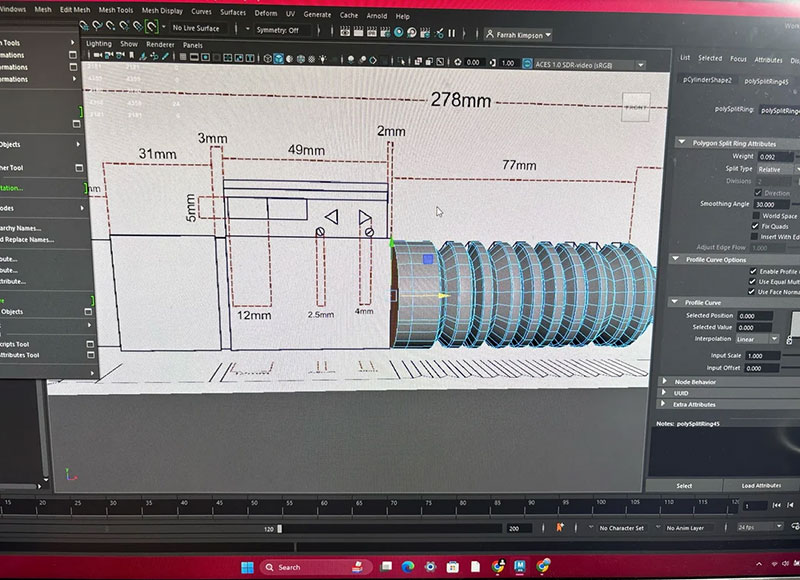
Every time a student moves a camera or rotates a character, they are working with coordinate systems—even if software performs calculations automatically.
2. Geometry Builds Characters
Every animated character is made from shapes.
- Faces are polygons
- Models consist of vertices
- Environments rely on proportions
Students pursuing a BSc in Animation and VFX at ICAT College of Design and Media, Bangalore quickly realise that geometry helps maintain balance, symmetry, and believable design. Without proportion, even the most beautifully designed character looks unnatural on screen.
3. Mathematics Creates Natural Movement
Remember the walking character?
Animation depends heavily on:
- Timing
- Speed
- Acceleration
- Weight distribution
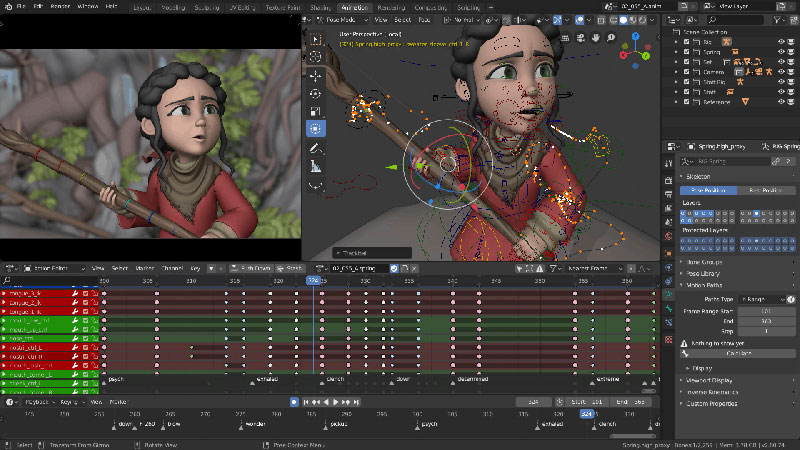
When students adjust animation curves in software like Maya or Blender, they are essentially shaping mathematical graphs.
That smooth ease-in and ease-out motion?
It's mathematics translating into emotion.
Where Math Becomes Magic: VFX & Simulation
Students enrolled in advanced VFX and animation courses at ICAT College of Design and Media, Bangalore often work on:
- Flowing water
- Flying debris
- Hair dynamics
- Cloth simulation
- Explosions
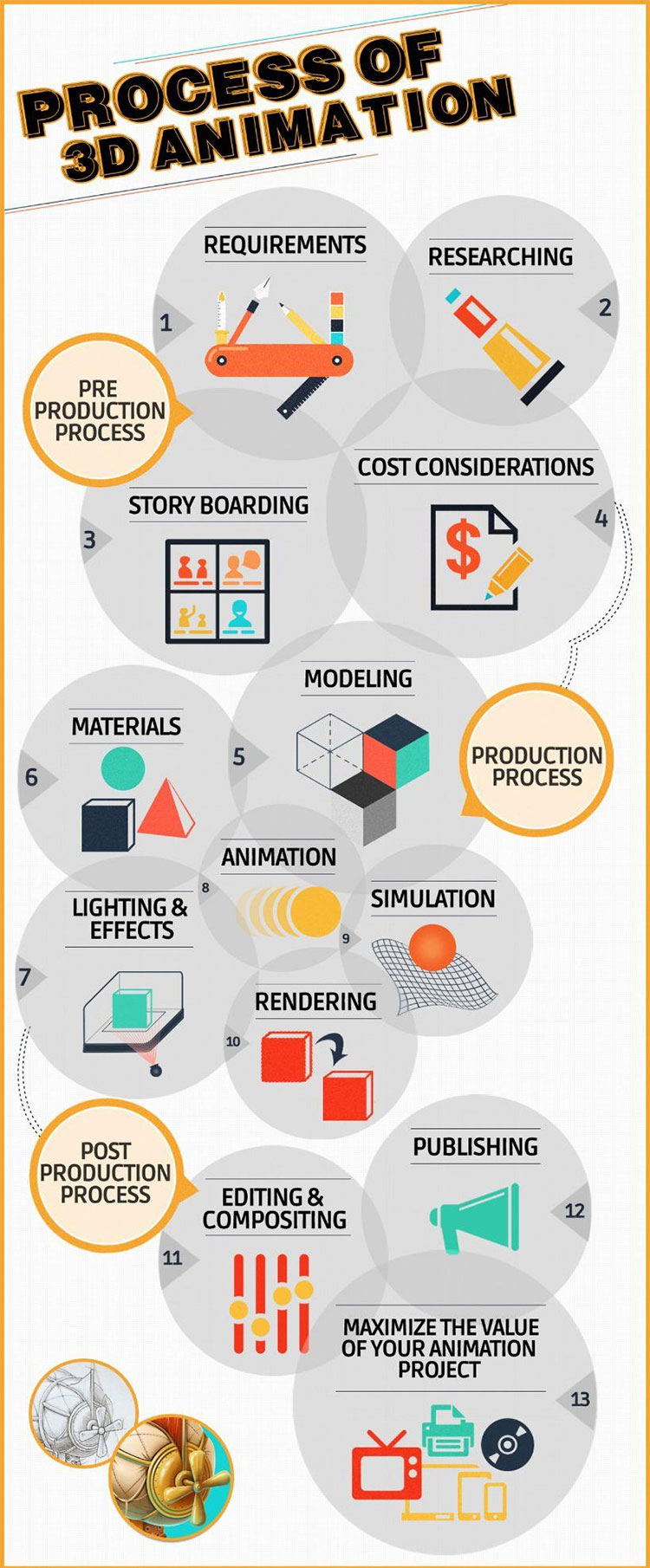
These effects follow physics principles powered by mathematical algorithms.
You don't calculate gravity yourself—but understanding motion helps you control realism.
This is why leading animation colleges in India like ICAT College of Design and Media, Bangalore integrate applied mathematics through practical projects rather than theoretical lectures.
Mathematical Thinking = Creative Problem Solving
Interestingly, animation students begin using maths without noticing.
During production projects, questions arise like:
- Why does this jump lack weight?
- Why does the camera motion feel robotic?
- How can rendering time be reduced?
Solving these involves logic, estimation, ratios, and structured thinking—the same mindset mathematics develops. Many students entering animation classes near me searches initially fear maths, but later discover it actually strengthens creativity.
Do You Need to Be Good at Maths?
Here's the honest answer from the faculty of animation dept at ICAT College of Design and Media, Bangalore.
- You need basic mathematical understanding
- You do NOT need advanced mathematics
While pursing a BSc Animation degree, a professional animation courses or learning 3d animation courses, ICAT, Bangalore teaches mathematical concepts through application, not abstraction. Students learn by animating—not memorising formulas.
Choosing the Right Animation Course After 12th
Today, animation education blends art, technology, storytelling, and logic. The best animation colleges in India like ICAT College of Design and Media, Bangalore focus on industry-ready skills such as:
- Character animation
- Game design
- VFX production
- Motion graphics
- CGI filmmaking
Programs like a BSc degree in Animation help students gradually understand technical foundations while nurturing artistic confidence. At ICAT Bangalore, students often begin with artistic curiosity and graduate with both creative and technical mastery.
Final Thought: Animation Is Where Art Meets Logic
Mathematics in animation is like the skeleton beneath a character—it supports movement but remains unseen. At ICAT College of Design and Media, Bangalore, you start with imagination. Then software introduces structure.
And slowly, you realise:
The reason your character finally walks naturally…
is because art and mathematics started working together.
So if mathematics once worried you, don't let it stop your creative journey. Animation doesn't demand perfection in maths—it simply asks you to understand motion, rhythm, and balance. And sometimes, that understanding turns imagination into cinematic reality.