

Unity vs Unreal – Which Is Best for Real-Time Rendering?
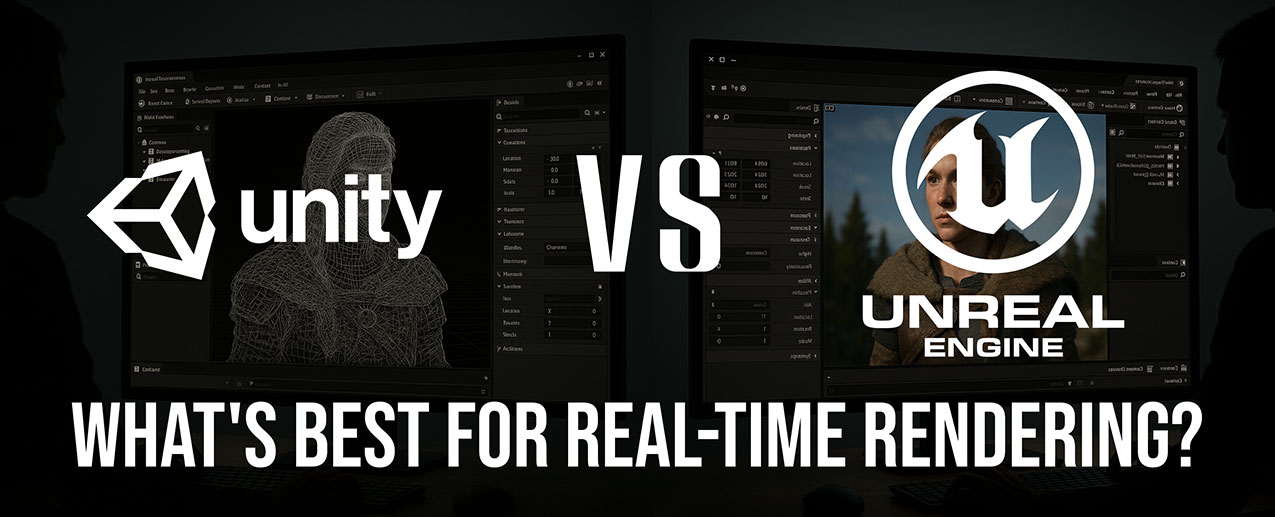
In today’s rapidly evolving VFX and animation industry, real-time rendering has become one of the most transformative technologies. It enables artists to visualize complex scenes instantly, reduce production time, and create immersive experiences for film, television, and gaming.
As part of the Emerging Technologies and Trends in VFX module at ICAT College, students learn about Unreal Engine and Unity, two of the best real-time engines in the world. Knowing how these engines are different will help future professionals pick the right tool for each creative task.
Unreal Engine: The Powerhouse of Cinematic Realism
Developed by Epic Games, Unreal Engine has become the industry standard for virtual production, real-time cinematics, and high-end visual storytelling.
With its advanced Lumen lighting system and Nanite virtualized geometry, Unreal can handle massive, photorealistic environments in real time — making it ideal for big-budget productions. It also integrates seamlessly with LED wall setups, allowing directors and VFX teams to view live actors against digitally generated environments during filming.
Used for:
- Virtual production and LED wall shoots
- Photorealistic VFX for film and television
- Real-time environment creation and camera tracking
Examples:
Major productions like The Mandalorian and Westworld rely on Unreal for real-time visual effects, showcasing how cinematic realism and technology now merge on set.
Unity: The Engine of Interactivity and Flexibility
People like Unity because it is fast, flexible, and easy to use. It's used a lot in AR/VR apps, interactive storytelling, and visualization, which are all areas where responsiveness and interactivity are very important.
With Unity's VFX Graph, Shader Graph, and Cinemachine tools, artists can create complicated camera, lighting, and motion effects with very little coding. Because it runs so smoothly, it's great for VR training simulations, previsualization, and design experiences that happen in real time.
Used for:
- AR/VR and interactive design projects
- Real-time previsualization
- Lightweight rendering and simulation workflows
Examples:
Brands use Unity to power immersive virtual showrooms, architecture walkthroughs, and even VR-based education and training.
What Students Learn at ICAT
Students at ICAT College not only learn about Unreal and Unity, but also how they fit into AI-driven pipelines. The Emerging Technologies and Trends in VFX module gives students a chance to learn about:
- AI-assisted rotoscoping and facial animation
- Real-time rendering with Unreal and Unity
- Virtual production and LED workflows
- VR training simulations and virtual sets
- VFX ethics, deepfakes, and misinformation awareness
Through hands-on projects, students experience how AI, real-time rendering, and cloud-based tools are shaping the next generation of VFX pipelines.
Final Thoughts
There is no one "best" engine when you compare Unity and Unreal; there is only the right one for the job. Unreal is great at making movies look real, and Unity is great at making workflows that are both interactive and quick.
ICAT students graduate with the skills they need to succeed in a future where real-time rendering is not just a skill but the basis of modern visual storytelling.