
Every animation student hits that pivotal crossroad: Should I dive straight into flashy 3D, or build from 2D basics? In 2026, amid AI-powered tools that churn out polished animations in minutes—what once took weeks—this dilemma feels more urgent. The thrill of shortcuts tempts many, promising instant success in a booming India's information technology industry projected to hit $400 billion globally by 2030, with the animation sector exploding thanks to studios like Green Gold and PhantomFX.
Animation today is surrounded by tools that are faster, smarter, and powered by AI. Students can now create animations in minutes that once took weeks. It feels exciting, and for many, it feels like a shortcut to success. Because no matter how advanced technology becomes, animation is not created by tools—it is created by understanding.
A Foundational Gap
As a 3D animation faculty member at the ICAT College of Design and Media in Chennai, I have witnessed a troubling trend. Students dazzle with software demos but falter when tasked with nailing timing, weight, or raw emotion in a character. It is not a creativity deficit—it is a foundational gap. When students are asked to adjust timing, refine weight, or bring real emotion into a character, many of them hesitate. Not because they lack creativity—but because they skipped building the foundation.
At ICAT, we tackle this head-on. We start from the ground up with rigorous practice and real-world observation. Our students do not just mimic motion—they internalise it, turning abstract sketches into breathing characters. My 3D students with solid 2D roots transition seamlessly. They do not blindly follow software cues; they command them, intuitively sensing movement rather than guessing. At its core, both 2D and 3D animation rely on the same principles — timing, spacing, balance, and performance. Without these, even the most visually appealing animation will feel empty.
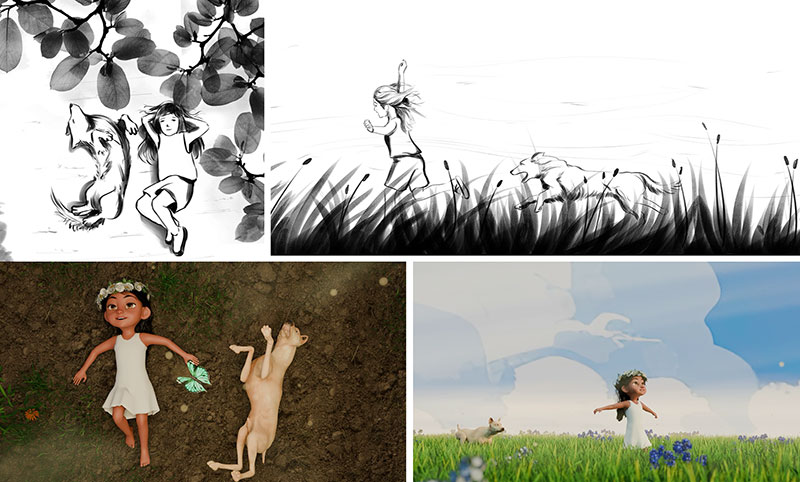
Figure 1: Practices in 2D animation drawings.
Modelling amplifies this foundation. Whether crafting 2D silhouettes or 3D meshes, grasping form, structure, and design makes every animation believable—like knowing a character's skeleton before making it dance. Our modelling teacher drills this into students, elevating their work from flat to lifelike.
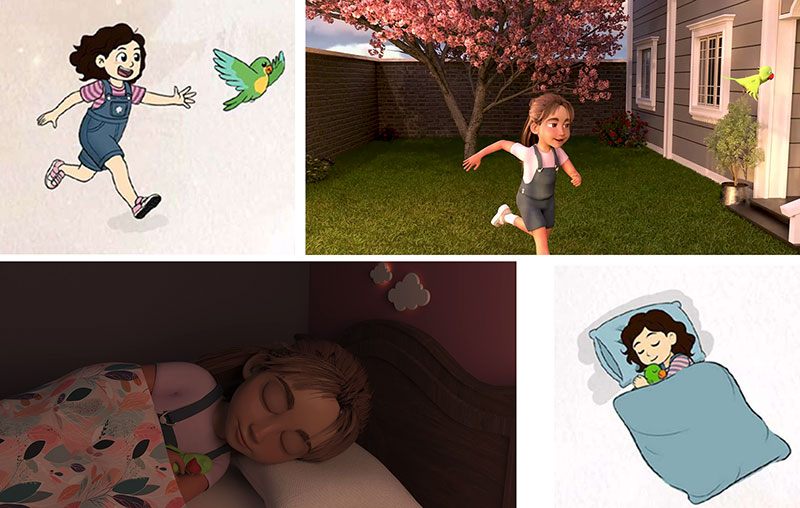
Figure 2: 3D modelling workflow.
Coming back to 3D, many students assume that software like Blender or Maya will do most of the work. But the truth is — the software only executes what you understand. That is why I always emphasise one important habit for every student stepping into 3D: Line drawing practice. Even for 3D animators, drawing sharpens observation, improves visualisation, and helps in creating better poses. When students regularly practice drawing, 3D animation becomes easier, more controlled, and more expressive. Take Priya, a former student: her daily sketches transformed stiff rigs into emotive performances, landing her a role on a Prime Video series.
AI? It is inevitable and invaluable—not a crutch, but a turbo-boost. Master 2D/3D fundamentals first, then harness tools like Midjourney for concepts or Runway for roughs to skyrocket efficiency. I have seen the divide starkly: tool-obsessed students churn lifeless clips, while fundamentals-first adaptable whizzes thrive amid change.
Reflective Visual Journal
The Reflective Visual Journal (RVJ) initiative involves mind mapping and documenting visual progression that augments a student's creative thinking. Far beyond assignments, it is a production simulator: students apply fundamentals under pressure, gaining confidence and workflow savvy. One of our recent graduates told me, "RVJ turned my shaky sketches into a festival reel—now I am interning at a Mumbai VFX house."
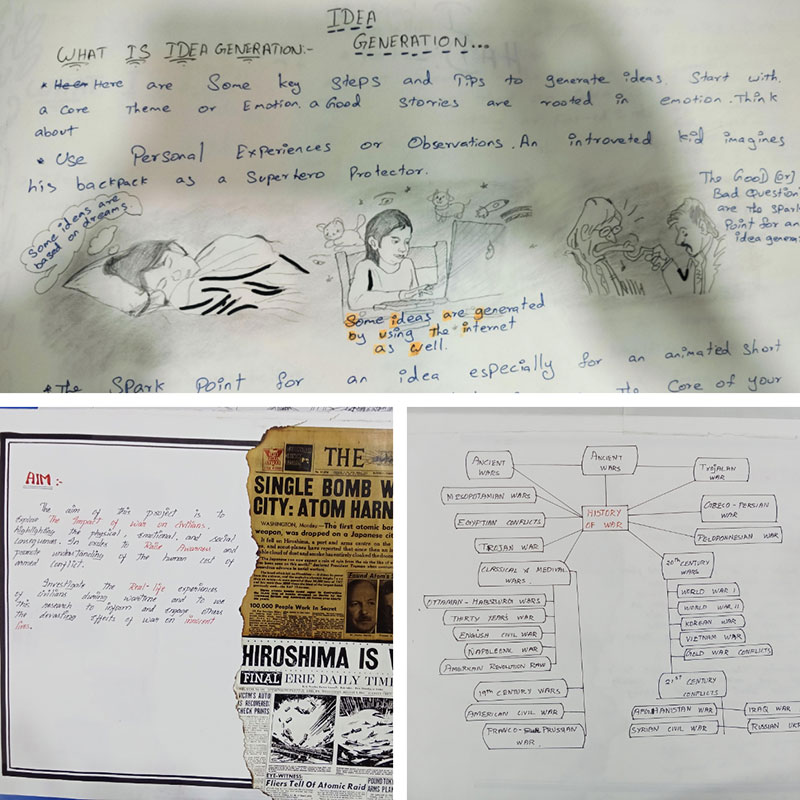
Figure 3: Reflective Visual Journal works.
So, to every wide-eyed student: Start where thinking trumps clicking—with 2D evolving to 3D, bolstered by modelling and RVJ projects. Industry shifts, AI surges, tools evolve—but rock-solid foundations ensure you will create impact, not just output. At ICAT, we are building not mere animators, but animation architects of tomorrow.
The animation industry will continue to evolve. AI will grow. Tools will change. But if your foundation is strong, you will never feel lost. Because in the end, tools can create output but only understanding can create impact.