
In the fast-changing world of animation, every great story starts with a bold idea. For Samraj, it was a deep philosophical question: Can a machine feel love? This sparked the short film Soul in Steel, a title that captures its emotional and imaginative heart.
Early on, Samraj tested many concepts through a reflective visual journal (RVJ) that revealed his creativity and methodical process. Soul in Steel shone brightest with its fresh take, clear vision, and emotional pull, earning jury approval. The project soon became a team effort. Samraj teamed up with classmate Rajasimhan, combining their strengths to tackle storytelling. They sketched multiple mind maps and storyboards, tweaked key scenes, and polished visuals until they nailed a strong animatic—the blueprint for production.
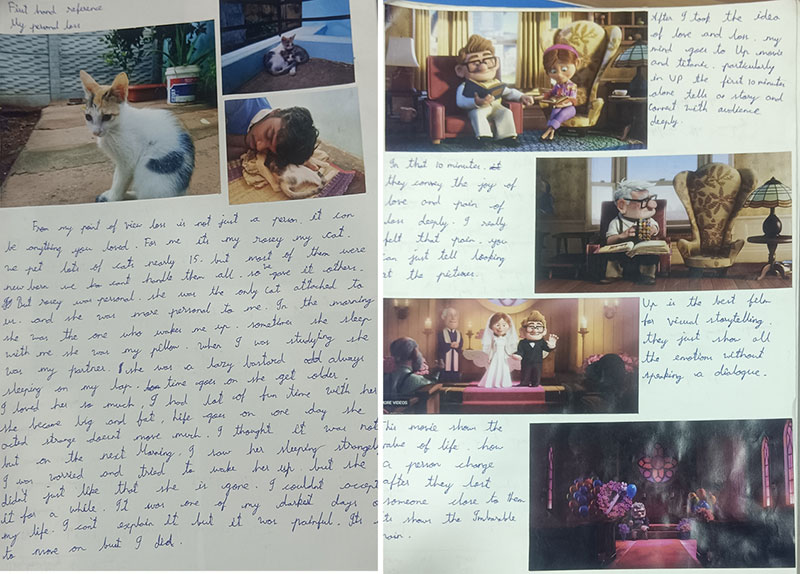
Figure 1. Idea generation of the story, following the death of a pet cat.
The Real Work Behind
The sleek final film hides a tough road. Like many students new to 3D animation, Samraj and Rajasimhan hit creative and technical roadblocks. Translating emotions like love and loneliness into a faceless machine was hardest. Without human-like expressions, they used body language, timing, posture, and camera work to make feelings come out.
The 3D pipeline brought more hurdles—from modelling and texturing to rigging and animating. Time pressures, study deadlines, creative slumps, render glitches, and errors tested their grit.
Hitting Industry Standards
Faculty support turned challenges into growth. They gave targeted feedback at every step, sharpening both creativity and skills—not just to finish, but to match professional-level quality. Students learned professional workflows, organised files cleanly, and obsessed over lighting, composition, and renders.
Reviews caught errors early. Instead of handing out fixes, mentors taught root-cause problem-solving by critiquing, building real confidence. Samraj and Rajasimhan gained technical nuances plus teamwork, communication, and adaptability—key for animation careers.
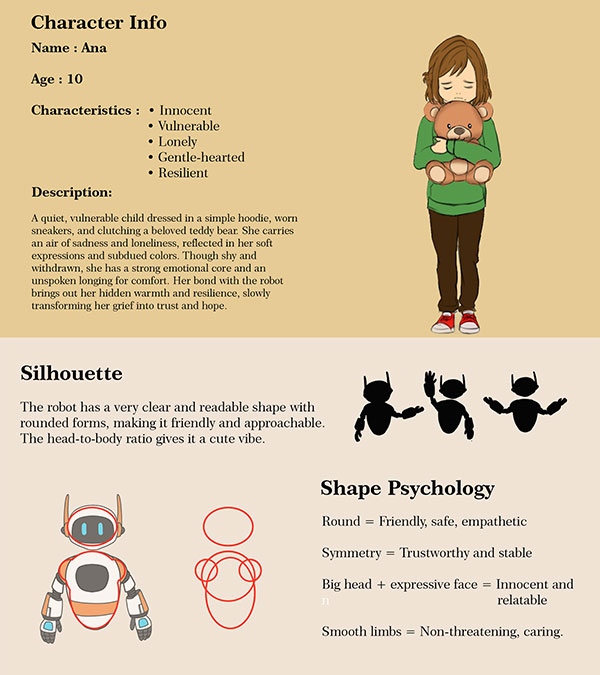
Figure 2. Psychology with regards to shapes of a robot and a girl.
Animation Techniques in Action
In full production, their dedication shone, with animation techniques at the core of bringing the mechanical protagonist to life. Rajasimhan handled character design and visuals, giving the machine relatable depth and personality that fit the story's mood. He started with polygonal modelling in Blender, sculpting a humanoid robot frame from low-poly bases to ensure clean topology for deformation. Texturing followed with procedural PBR (Physical Based Rendering) materials—metallic shaders with subsurface scattering for subtle glows during emotional "heart" moments, layered via node graphs to mimic worn steel and flickering circuits.
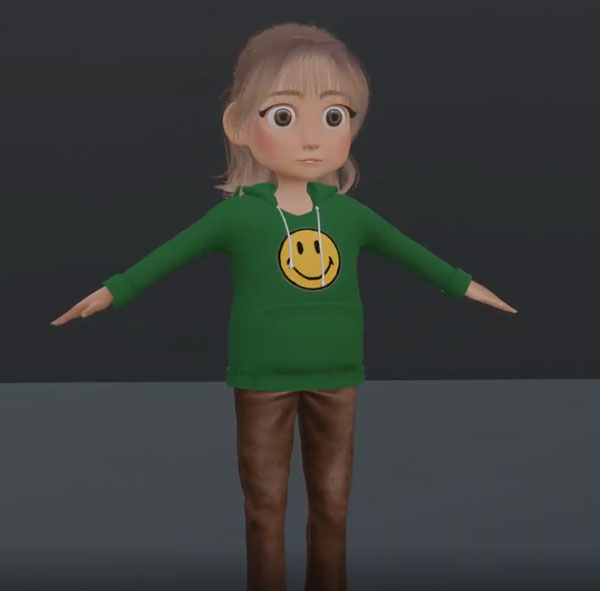
Figure 3. A slide from the pre-production stage, where a character is being rendered.
Samraj built assets and environments to boost the narrative, using kitbashing for modular industrial sets that supported dynamic camera moves. Together, they dove into rigging. They employed advanced procedural rigs with IK/FK switches and custom controls for pistons, gears, and articulated limbs. Spine deformers and lattice modifiers allowed fluid bending without clipping, while drivers automated secondary motions like hydraulic hisses synced to breath-like cycles. This setup was iterated over dozens of revisions to handle extreme poses, like a tentative "embrace," where joint limits prevented unnatural breaks.
Animation relied heavily on keyframe techniques blended with graph editor finesse. To convey love without faces, they applied the 12 principles of animation meticulously. Anticipation built tension in subtle gear whirs before a reach; squash-and-stretch simulated emotional "pulses" by compressing the chassis during longing stares and stretching it in hopeful extensions. Overlapping action made limbs lag realistically—arms trailing heavy from exhaust, then snapping forward with purpose. Follow-through and arcs gave movements organic weight, like a head tilt slowing into a resonant hold, evoking vulnerability.
Timing and spacing were crucial for subtlety. Slow-ins and slow-outs paced introspective walks, with easing curves creating a heavy, deliberate gait that accelerated into frantic searches for connection. Pose-to-pose blocking established broad beats in the animatic, refined via spline tangents for silky interpolation. They layered secondary animations—vibrating panels for inner turmoil, flickering lights as "tears"—using non-linear animation (NLA) tracks for efficiency. Motion capture was not feasible for the robot, so hand-keyed cycles drew from human references, exaggerated via multipliers for machine scale.

Figure 4. A robot starts showing emotions.
Cinematic techniques amplified this. Dynamic camera rigs with dolly zooms framed isolation, while depth-of-field blurred backgrounds to focus on micro-gestures, like a claw-hand trembling mid-reach. Lighting used three-point setups with volumetric "god rays" piercing foggy factories, rim-lighting the robot to outline "soul" contours. Global illumination via Cycles renderer captured moody bounces, with denoising (of removing unwanted noise) and compositing in the viewport for quick previews.
Rendering demanded optimisation: adaptive sampling reduced noise on metallic surfaces, while AOV (Arbitrary Output Variables) passes (diffuse, specular, emission) enabled post tweaks in the compositor for colour grading—cool blues for loneliness warming to golden hues in connection. Test renders at 50% resolution caught issues early, ensuring 1080p output at 24fps hit 2-3 minute runtime without artifacts. These techniques not only solved technical woes but elevated the emotion, making the machine's "love" palpable through motion alone.
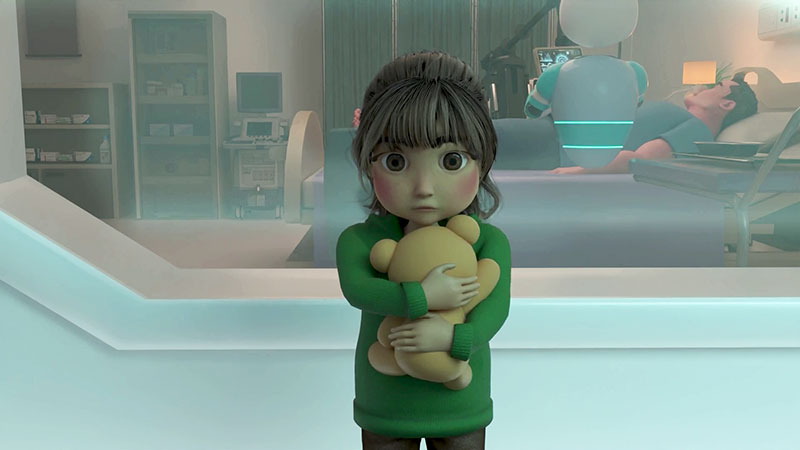
Figure 5. A girl in the film in a pensive mood following the death of her dad.
A Milestone Achievement
Soul in Steel is more than a student film—it is proof of creativity, grit, and bold ideas backed by smart guidance at the Department of Animation in the ICAT College of Design and Media, Chennai. Samraj and Rajasimhan show that top animation blends storytelling, emotion, and persistence, not just tools. This proud milestone proves mentorship and drive can launch students to professional (pro) levels.
Highlights
- Original concept: Emotions in machines
- Collaborative effort: Tight student teamwork
- Technical growth: Rigging, keyframing, rendering mastery
- Industry standards: Pro workflows and quality
- Creative courage: Bold, unconventional stories
Soul in Steel – A 3D Animation Short Film Coming Soon!