
Style is knowing what suits you, who you are, and what your assets are. It's also accepting it all. —Bianca Jaggera
In the world of fashion, many dream of becoming the next big designer – but what if you can't draw? Indeed, you do not need sketching prowess to succeed. "Don't worry about the art; just let your creativity flow," says designer Priya Sharma, who built a thriving label without ever picking up a pencil for fashion sketches.
The myth that every great fashion designer is a master illustrator continues to persist. Think of iconic names like Yves Saint Laurent or Stella McCartney – they were not celebrated for their drawings. What matters is your ability to communicate bold ideas through garments that turn heads. Sketching is just one tool in the toolbox.
Technology has made it easy. Gone are the days when hand-drawn sketches ruled. Software like Adobe Illustrator lets beginners craft precise diagrams showing garment construction from every angle. For a more immersive approach, CLO 3D and Marvelous Designer allow you to build virtual 3D models. Drag fabrics onto digital mannequins, tweak drapes, and simulate how a dress falls in motion. Manufacturers actually prefer these digital files over sketches; they are accurate and ready for production. Aspiring designer Alex Rivera, 25, from Mumbai, swears by it: "I zeroed in on CLO during Covid-19 lockdown. Now my ideas come alive in 3D before I touch a needle."
However, technology is not the only path. Many pros skip drawing altogether by draping fabric directly on a mannequin. This tactile method – pinning, folding, and sculpting cloth – relies on intuition for how materials behave. No pencils needed, just a keen eye for silhouette and flow. It is how designers like Madame Grès created her legendary pleated gowns in the 1930s, and it is still taught in top schools like London's Central Saint Martins.
Visual storytelling offers another low-skill entry point. Create a moodboard: a collage of inspiring images, fabric swatches, colour palettes, and texture samples. Pin them to a corkboard or assemble digitally on Pinterest. This storyboard captures your vision's vibe — say, a bohemian collection evoking Rajasthan's deserts with earthy terracotta hues and flowing chiffons. It speaks volumes to collaborators without a single stroke.
Ultimately, success hinges on core skills beyond doodling. What problem does your design solve? A jacket for India's humid monsoons needs breathable linens and smart vents. Master textiles know silk's sheen versus cotton's drape. Grasp pattern-making, stitching, and fit; designs without these are just fantasy. "Fabric selection and fitting are where magic happens," says Priya. "I've seen non-drawers outshine artists because they nail the wearability."
Designer Sabyasachi Mukherjee started with bold ethnic fusion ideas, using draping and moodboards to pitch. Today, his empire spans red carpets. Or, consider indie labels on Instagram, where 3D renders sell collections before samples exist.
So, if sketches scare you, take it easy. Focus on originality, fabrics, and communication. Enrol in online courses for CLO 3D (many are free on YouTube), experiment with thrift-store draping, or snap moodboards on your phone. The industry craves fresh voices solving real wardrobe woes. Fashion design is problem-solving wrapped in creativity.
Ditch the drawing block. Give your ideas the platform they deserve.

You don't need to be good at drawing to become a successful fashion designer. Sketching can help, but it's not required. Today, there are many other ways to show your creative ideas. "Don't worry about the art; just let it flow." There is a misconception that all designers are good illustrators, which is not true. If you are strong in conveying your creative ideas through your designs. You can make your identity in the industry. Many talented designers showcase their concepts using a type of technique. Don't forget that sketching is only one way you communicate your design story. That is not the only option. From my prospective I feel today with the growing technology we can get many options to convey your point of view, which can be implemented as an example Software like Adobe Illustrator and CLO 3D, etc. By which you can create specific technical drawings, and you can even create three-dimensional models of your ideas. These software programs are less valued than a hand-drawn sketch for manufacturers. Many professional and aspiring fashion designers like to drape their designs directly on the mannequin.
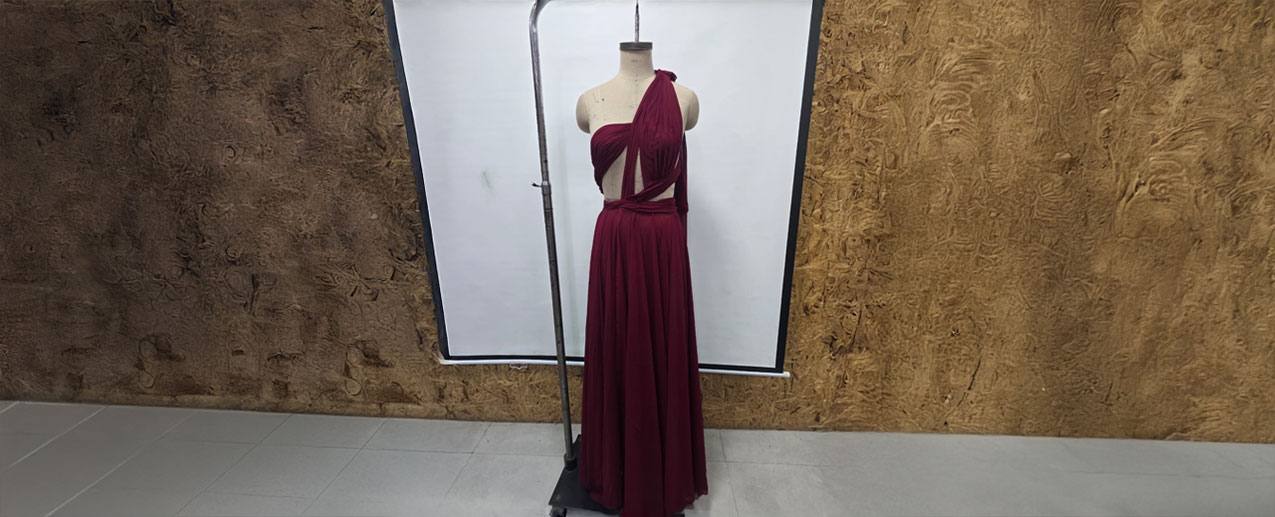
This type of draping of fabric doesn't require drawing skill at all, As drapping is all about understanding the shape and fall of the fabric. Arranging pictures as a collage called Moodboard, textures, and colour swatches, like story board and colour board, lets you effectively express your vision. Which helps you to understand the tone and shades, which helps you to convey your vision in a much better way. Concentrate on what you actually need is rather than observing your work; concentrate on practising the skills that make a great designer: Your concepts and original ideas are your most priceless resources. You also need a basic understanding of textiles, apparel design, and stitching is a must. Design is beyond imagination unless one knows how design is created. From selecting the right fabrics to checking correct fitting and manufacturing, fashion design is a creative solution to a variety of issues.