
As a student of fashion design, I've always been fascinated by the way faith, history, and craft intersect to create meaning beyond aesthetics. For my final project, I chose to explore a fusion that is as spiritual as it is artistic: the stories of the Prophets integrated with the living craft traditions of Morocco. This collection is not just about garments – it is about translating resilience, miracles, and sacred narratives into a contemporary, avant‑garde space for modest fashion.
Stories and Symbols
The starting point of my research was the timeless stories of the Prophets. Each narrative carries motifs that are deeply symbolic and emotionally resonant. For example, the tree from the story of Adam (AS) represents both temptation and renewal. The deep blues of the sea recall the journeys of Yunus (AS) and Nuh (AS), evoking survival, surrender, and divine mercy. These motifs became the foundation of my design language.
Overlaying these sacred elements onto Moroccan artistry seemed natural. Moroccan Islamic art is built on precision, geometry, and symbolism. Zellij tilework, with its infinite tessellations, mirrors the idea of divine order. Mashrabiya woodwork, with its interplay of light and shadow, embodies privacy, spirituality, and beauty. Together, they offered me a vocabulary to express "Sacred Geometry," a concept that exists both in nature and in human history.
Architecture as Garment
One of the most compelling aspects of Moroccan architecture is the Mashrabiya. These carved wooden screens filter desert sunlight into intricate geometric shadows, creating a balance between openness and privacy. I wanted to translate this architectural principle into fashion. My solution was macramé: hand‑knotted cords that mimic the latticework of Mashrabiya, but in a fluid, wearable form. This technique allowed me to bring the architecture of light into garments, turning shadows into patterns that move with the body.
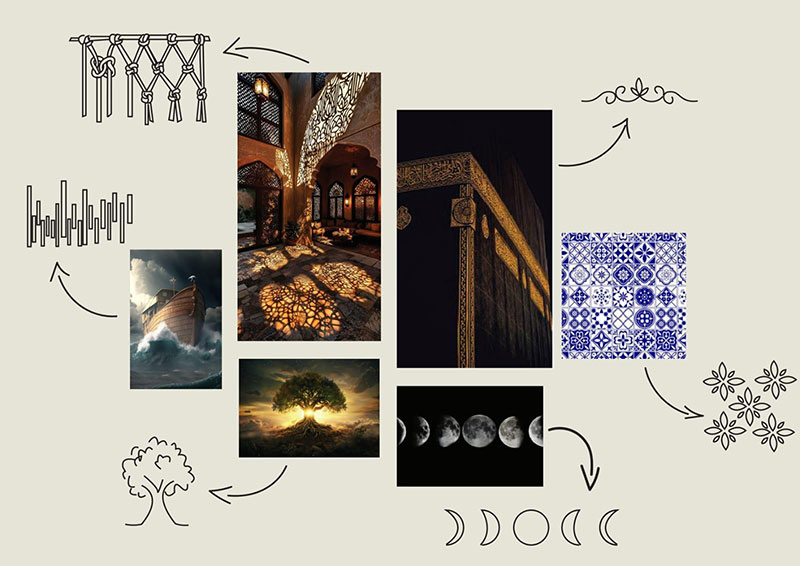
Figure 1. An exploration board.
Mood Board: Divine Fluidity
My mood board reflects curiosity and reverence. I call it "Divine Fluidity," a concept that anchors the collection. It is inquisitive, drawing from both prophetic stories and Moroccan architecture. For the colour board, I centred the palette around Transformative Teal. This shade is pivotal: it represents transition, mysticism, and depth. Teal bridges the earthly and the spiritual, making it the perfect colour to unify prophetic narratives with Moroccan artistry.
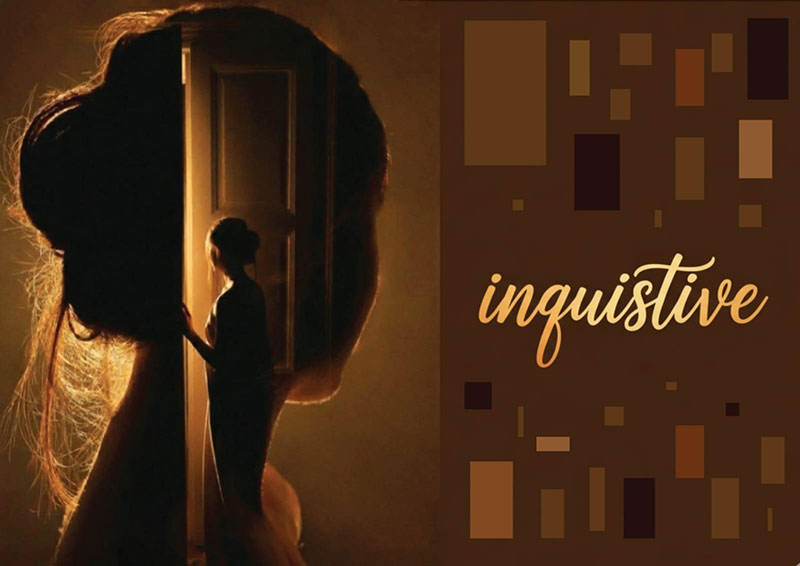
Figure 2. A mood board.
Fabric Research: Delhi to Chennai
Design research is not only about ideas; it is also about materials. To source fabrics that could embody strength and softness, I explored textile markets across India. My journey took me to Nehru Place, Chandni Chowk, and Seelampur in Delhi, as well as Sowcarpet and Parry's Corner in Chennai. Each market offered a different perspective on texture, weight, and availability.
Nehru Place was rich in technical fabrics, perfect for structured silhouettes. Chandni Chowk, with its heritage textiles, offered depth and cultural resonance. Seelampur provided affordability and variety, while Sowcarpet and Parry's Corner revealed vibrant blends and regional specialties. Beyond just buying fabric, this research became a deep dive into the logistical side of fashion – understanding supply chains, negotiating with vendors, and evaluating quality.
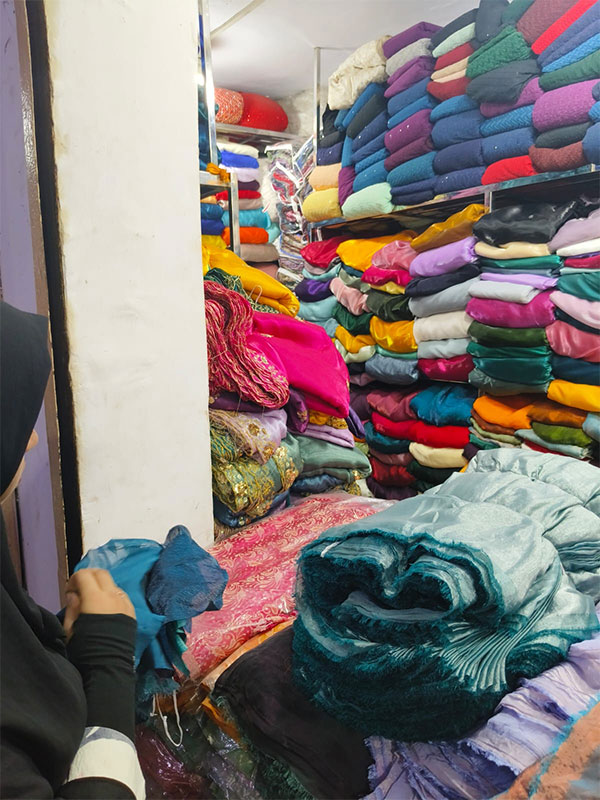
Figure 3. A fabric study.
Synthesis of Soul and Style
This project has been a journey of discovery. I began with sacred stories, layered them with Moroccan craft, and grounded them in the textile resources of India. The result is a synthesis of soul and style. The garments are not just clothes; they are carriers of meaning. They embody resilience, privacy, light, and geometry. They speak to both the strength and the softness of faith.
As a student, what excites me most is the possibility of bringing modest fashion into a contemporary, avant‑garde space. Too often, modest fashion is seen as restrictive. Through this project, I want to show that modesty can be innovative, experimental, and deeply expressive. By weaving together prophetic narratives, Moroccan artistry, and Indian textiles, I created a collection that is both timeless and forward‑looking.
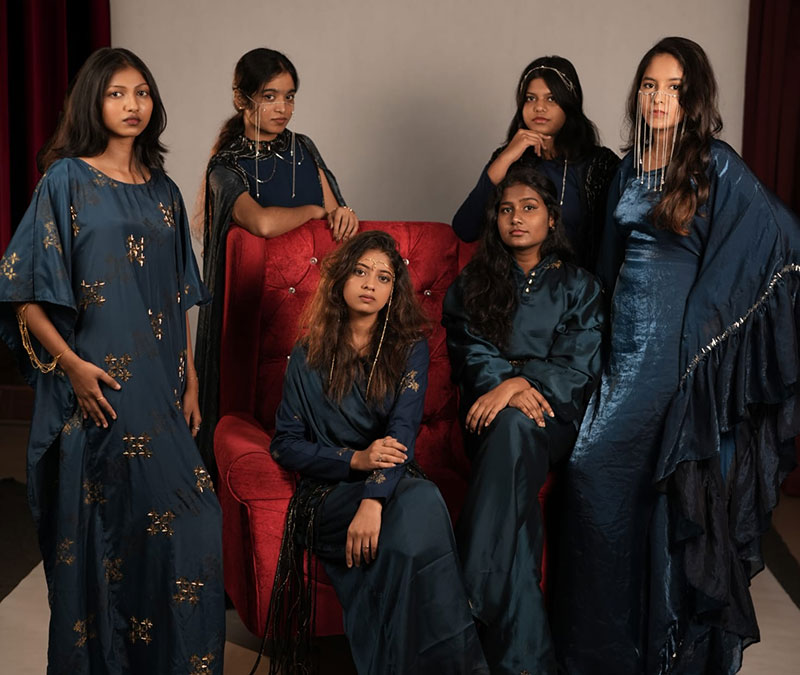
Figure 4. The final collection that was inspired by Hidayah.
A Journey of Faith and Craft
Fashion is often described as surface, but for me, it is a medium of storytelling. This project has taught me that garments can carry history, faith, and craft in ways that are both subtle and powerful. The stories of the Prophets remind us of resilience and divine mercy. Moroccan artistry reminds us of geometry, light, and privacy. Indian textiles remind us of diversity and resourcefulness. Together, they form a tapestry that is both sacred and stylish.
'Hidayah' is not just a collection. It is my attempt to fuse the spiritual with the aesthetic, the ancient with the contemporary, and the modest with the avant‑garde. As I move forward, I carry with me the belief that fashion can be more than clothing. It can be a language of faith, history, and artistry, spoken through fabric, form, and light.