
A CGI Short Film on Grief, Memory, and Visual Storytelling
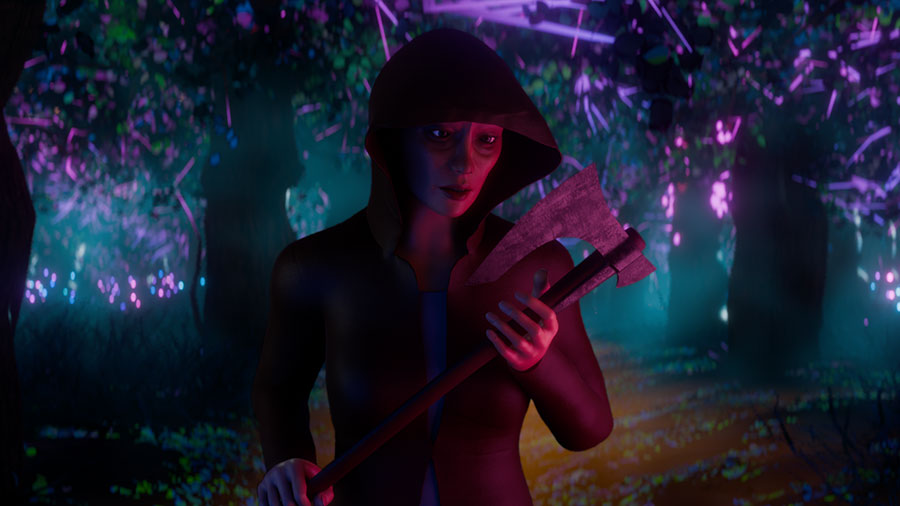
Figure 1: The Memory Grove environment during early development - a procedural forest system in progress, where each tree represents a fragment of memory.
Grief is often described as something to overcome, something to move past. Yet, in the process of creating Memory Grove, I found myself questioning that idea. What if grief is not meant to be erased, but understood?
Memory Grove is a CGI short film built around this question. Developed as part of my journey in the Media Technology Course at ICAT College of Design and Media, the project explores the emotional process of accepting loss. It suggests that true solace does not come from forgetting, but from learning to coexist with memory.
Concept and Story Development
At its core, Memory Grove follows Sera, a character navigating grief within a surreal forest where each tree represents a memory. Some are vibrant and alive, while others are broken or fading.
The story explores Sera's attempt to disconnect from painful memories, only to realize that letting go of them means losing a part of herself.
Instead of a linear narrative, the film embraces emotional complexity moving through denial, anger, and reflection. A mystical guide appears as a turning point, gently leading Sera toward acceptance. The storytelling relies heavily on visual expression over dialogue, using environment, motion, and symbolism to communicate emotion.
Visual Development and Environment Design
The Memory Grove is not just a setting; it is an active part of the story.
The forest was created using procedural systems, allowing each tree to have unique variations in shape, size, and structure. This reinforces the idea that every memory is different.
At the same time, controlled parameters ensured:
- Balanced composition
- Natural randomness
- Narrative-driven design
Lighting played a major role in defining mood:
- Soft, diffused lighting for reflective moments
- High contrast lighting for tension and conflict
The environment evolves alongside Sera, visually representing her emotional state.
Character Creation and Animation
Since the film has minimal dialogue, animation becomes the primary storytelling tool. Sera's emotions are expressed through:
- Body language
- Movement
- Timing
Special attention was given to secondary motion, particularly cloth simulation. Her coat reacts to wind, adding realism and emotional depth to each scene.
A supporting character was created using Unreal Engine's Metahuman framework, enabling realistic human features while maintaining efficiency in production.
The Pivotal Scene: Emotional Transformation
One of the most important moments in the film is the appearance of a mystical guide, a deer-like figure made of glowing particles.
This scene represents a shift from resistance to acceptance.
Technically, it involved:
- Particle simulations
- Wind dynamics
- Environmental interaction
Artistically, the goal was subtlety. The guide does not overpower the scene but gently interrupts Sera's attempt to erase a painful memory.
This moment defines the film's message:
Acceptance is not surrender; it is understanding.
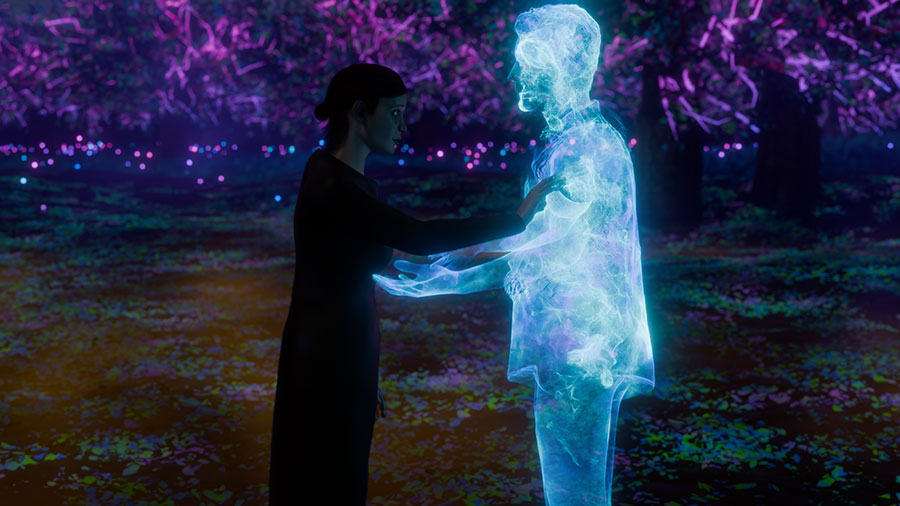
Figure 2: Behind-the-scenes view of character setup and animation including cloth simulation and shot composition.
Technical Pipeline and Execution
The project was built using an industry-standard pipeline:
- Blender – Modeling, animation, rendering
- Houdini – Procedural systems and simulations
- ZBrush – High-detail sculpting
- Substance Painter – Texturing and materials
- Adobe Premiere Pro – Final editing and sequencing
This multi-software workflow reflects the practical training environment at ICAT, where students gain exposure to real production pipelines.
Challenges and Learning Outcomes
Some of the biggest challenges included:
- Balancing procedural control with artistic intent
- Conveying emotion without dialogue
- Managing complex simulations
These challenges reinforced the importance of integrating creativity with technical problem-solving, one of the key takeaways from my time at ICAT.
Conclusion: A Story Beyond Visuals
Memory Grove is more than a technical project; it is an exploration of emotion, memory, and identity. It reflects how animation can move beyond visuals to create meaningful experiences.
Through my journey at ICAT, I have learned that storytelling in CGI is not just about realism, but about purpose. Every frame, simulation, and movement contributes to a larger emotional narrative.
Showcasing Memory Grove to a wider audience at the ICAT College Graduation Showcase held at Mantri Square Mall was a rewarding experience, and the positive feedback from faculty, industry professionals, and visitors was incredibly encouraging. It validated both the emotional depth and technical execution of the project.
This project stands as a testament to that belief and marks the beginning of my journey as a storyteller.
Explore more student project blogs to see how innovative ideas are brought to life.