

In an age when many jobs can feel abstract, repetitive, or far removed from their supposed purpose, teaching stands out for clarity. At the ICAT College of Design and Media, the work of a faculty member is not hidden behind endless reports, fake productivity, or tasks that disappear without consequence. It is visible in a student's portfolio, a short film, a design prototype, a VFX project, or a confident presentation that turns into a career. It is also visible through alumni success stories and industry journeys that reflect the long-term impact of this work. Teaching here is practical, creative, and humane.
The college's classrooms and studios are spaces where learning is tied directly to industry practice. Students are not just memorising concepts; they are learning animation, graphic design, filmmaking, UI/UX, and interior design in ways that prepare them for real careers. In cities like Chennai, Hyderabad, and Bengaluru, where the creative industry continues to grow, this kind of education has direct social value. It helps build the next generation of designers, filmmakers, and media professionals who will contribute to studios, agencies, production houses, and India's digital economy with specific respect to AVGC. (AVGC stands for animation, visual effects, gaming, and comics.) Sharing student work and alumni journeys through platforms such as LinkedIn and Instagram further extends this impact, turning learning into inspiration for a wider community.
ICAT has campuses in Chennai, Hyderabad, and Bengaluru, and for the first time, ICAT Chennai is offering four-year B.Des. Interior Design and B.Des. Fashion Design from the academic year 2026-27.
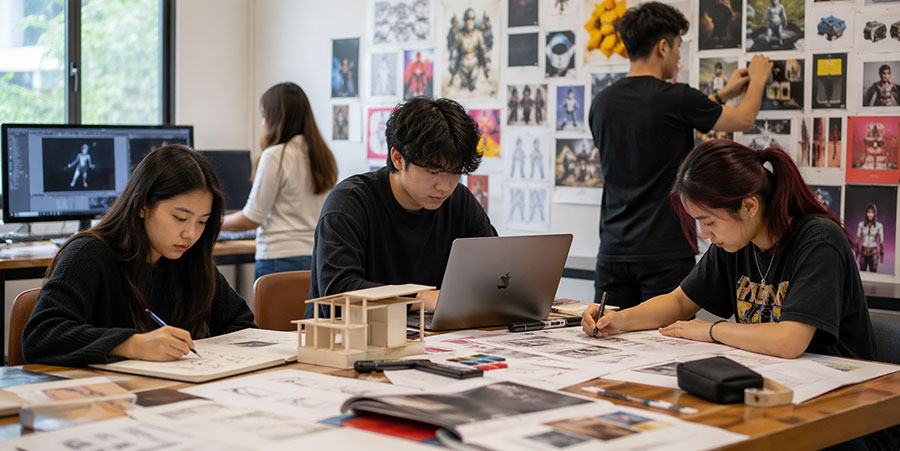
Figure 1: A representational photo of ICAT students at work
From ego to teamwork
What makes teaching truly effective is not just technical knowledge, but the ability to work with people. In a design and media institution, faculty members often come from different disciplines, backgrounds, and creative philosophies. That diversity is a strength, but only when it is guided by teamwork. The real challenge is not proving who is right; it is building a culture where everyone contributes, listens, and respects the independence of others. Egos have little place in such an environment.
Good teaching depends on collaboration between faculty members who may have different methods but a shared purpose. It also depends on accepting that each teacher brings something distinct to the table. At the same time, it calls for a sense of ownership—where each faculty member reflects on their contribution to student growth and departmental progress. When faculty appreciate one another's strengths instead of competing for recognition, the entire institution becomes stronger. Students notice that spirit. They learn that creative work is rarely a solo performance; it is a team effort built on trust. Team spirit is also nurtured through collaborative learning, joint project works, and industrial/field tours.
The value of visible results
One of the most rewarding aspects of teaching is the possibility of seeing real results. Unlike many jobs, where hours can pass without any meaningful outcome, teaching offers immediate and lasting evidence of impact. A student improves. A project gets sharper. A weak idea becomes a strong one through feedback. A final-year portfolio opens the door to the first job. A graduate earns a place at a studio such as PhantomFX, Green Gold Animation, and Sony Interactive Entertainment.
This is where the work becomes deeply fulfilling. The teacher is not merely completing tasks for appearance's sake. The teacher is helping someone grow. That growth can be seen, assessed, and celebrated—not only within the institution but also through the stories alumni carry into the industry.
Mentorship that shapes lives
Good teaching is never only about correction. It is also about appreciation. A strong teacher knows when to push a student harder and when to praise genuine effort. That balance builds confidence. It creates the kind of relationship that can change a student's view of their own abilities.
At ICAT, this mentorship becomes part of a larger mission. The college's industry-relevant programmes reflect the real demands of the creative sector. Faculty members are not only teaching software or theory; they are preparing students for work that values originality, design thinking, and creative independence—qualities that cannot be easily replicated by artificial intelligence. In that sense, teaching is a vital form of industry preparation.
A profession worth defending
David Graeber's idea of pointless work helped many people name a feeling they already knew: the unease of being busy without being useful (what he termed as "bullshit jobs"). Teaching stands on the opposite side of that divide. It is one of the clearest examples of work that matters because its outcomes are carried forward by other people.
At the ICAT College of Design and Media, the teacher's role is not buried in paperwork or boring routine. It is lived every day in studios, labs, critiques, and conversations that shape careers. It is also evolving—through continuous faculty development, engagement with industry experts, and a shared effort to build the ICAT brand through meaningful educational outcomes.
That is why design/media teaching deserves respect and appreciation, not just as a job, but as a public good. It builds skill, confidence, creativity, and imagination. It supports students, strengthens faculty communities, and feeds the creative digital economy of India. Most of all, it proves that meaningful work is possible when purpose, practice, and people come together.