
Crowds moving in different directions, conversations overlapping, lights constantly changing, and moments unfolding without warning – this is the world of event photography. Whether it is a college fest, an exhibition, a fashion show, or a cultural celebration, every event presents a unique challenge. Unlike controlled shoots, event photography does not wait for you to be ready. You have to be ready for it.
If you are someone who enjoys observing people, capturing expressions, and telling stories through images, event photography can be an exciting space to explore. Here are a few practical tips to help you approach it with confidence and clarity.
Understand the Nature of the Event
Before you even pick up your camera, take time to understand what kind of event you are covering. Is it formal or casual? Fast-paced or slow and ceremonial?
A design exhibition, for instance, will require attention to detail and documentation, while a dance performance will demand quick reflexes and anticipation. Knowing the flow of the event helps you position yourself better and prepare mentally for the kind of shots you need to capture.
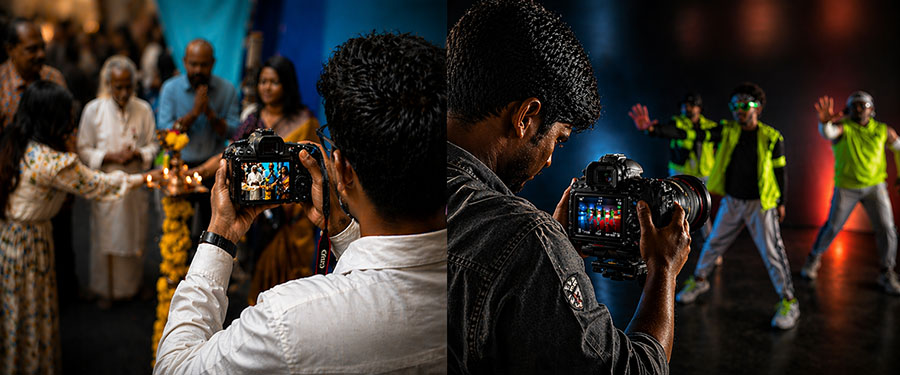
Figure 1: Every event demands its own approach to framing and lighting
Observe Before You Shoot
One of the most important tips for event photography is observation. Instead of shooting continuously, pause and watch what is happening around you.
Look for:
- Interactions between people.
- Genuine expressions.
- Moments of anticipation.
- Reactions rather than just actions.
Often, the most powerful images are not the obvious ones, but the subtle, in-between moments.
Be Ready for the Changing Light
Event spaces rarely offer perfect lighting. You might move from bright open areas to dim indoor setups within minutes.
Learn to adjust quickly:
- ISO for low light situations.
- Shutter speed for movement.
- White balance for mixed lighting.
Over time, this becomes instinctive and is a crucial part of developing strong photography skills for events.
Position Yourself Thoughtfully
Where you stand matters as much as what you shoot.
Try to:
- Avoid blocking the audience.
- Find angles that give depth and layering.
- Include foreground, subject, and background elements.
Sometimes stepping a little to the side or lowering your angle can completely change the strength of your frame.
Focus on Storytelling, Not Just Subjects
Instead of taking isolated pictures, think in terms of a sequence.
Capture:
- The setup.
- The main moments.
- The reactions.
- The details.
When viewed together, these images should tell the story of the event. This approach is what separates casual documentation from meaningful event photography.
Blend into the Environment
A good event photographer knows how to be present without being intrusive.
Move quietly, avoid drawing unnecessary attention, and let people behave naturally. When subjects are comfortable, your images feel more authentic and less staged, which is an essential aspect of candid photography.
Pay Attention to Details
While big moments are important, details add richness to your coverage.
Look for:
- Decorations and textures.
- Hands, gestures, and props.
- Signage and design elements.
These small elements often bring context and depth to your final set of images, especially in professional event photography.
Practice in Real Environments
Event photography cannot be mastered through theory alone. It requires repeated exposure to real situations, different crowds, unpredictable moments, and varying lighting conditions.
The more you shoot in real environments, the more confident and intuitive your approach becomes. This kind of learning plays a crucial role in building a strong foundation in event photography for beginners as well as those looking to refine their craft.
Review and Reflect
After every shoot, take time to go through your images.
Ask yourself:
- Did I capture the key moments?
- Are my compositions strong?
- What could I have done differently?
This habit of reflection is what gradually sharpens your eye and helps you grow as a photographer.
Event photography is not just about capturing what is happening. It is about understanding why it matters and how to present it visually. With practice, patience, and the right exposure to real-world scenarios, you begin to anticipate moments rather than chase them. And that is when photography starts to feel less like a task and more like a way of seeing. This shift often comes through consistent hands-on experience, which is something students at ICAT are encouraged to build as part of their learning, through opportunities to photograph different kinds of events. We have a strong grounding in theory across a dedicated BSc Photography programme as well as photography modules as part of other degree programmes.