
Discover RESIDO, a smart residential management app designed by ICAT student Adithyan Pk. Learn how UX research, wireframing, and UI design created a seamless tenant and landlord experience.
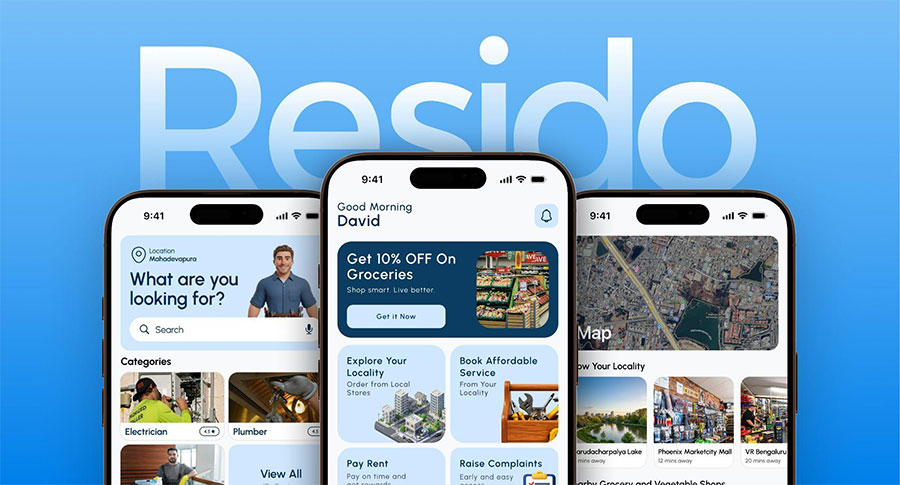
Managing apartments and residential communities can often feel chaotic. Tenants struggle with rent payments, raising complaints, and accessing services, while landlords face communication gaps and organizational challenges. To address this, I designed RESIDO, a smart residential management app that simplifies everyday living for tenants and landlords. This blog outlines the entire UI/UX design journey behind RESIDO, from research to final interactive prototype.
Identifying the Problem: Why RESIDO Matters
During my UI/UX design course at ICAT College of Design and Media, I observed that many residential communities rely on manual processes or scattered apps, leading to inefficiency. Common issues included:
- Forgetting rent payment due dates
- Lack of transparency in complaint resolution
- Difficulty finding trusted local services
- Poor communication within the community
These insights highlighted a need for a centralized, user-friendly platform. RESIDO was conceptualized as a one-stop solution to streamline residential management tasks and enhance community interaction.

Research Phase: Understanding Users
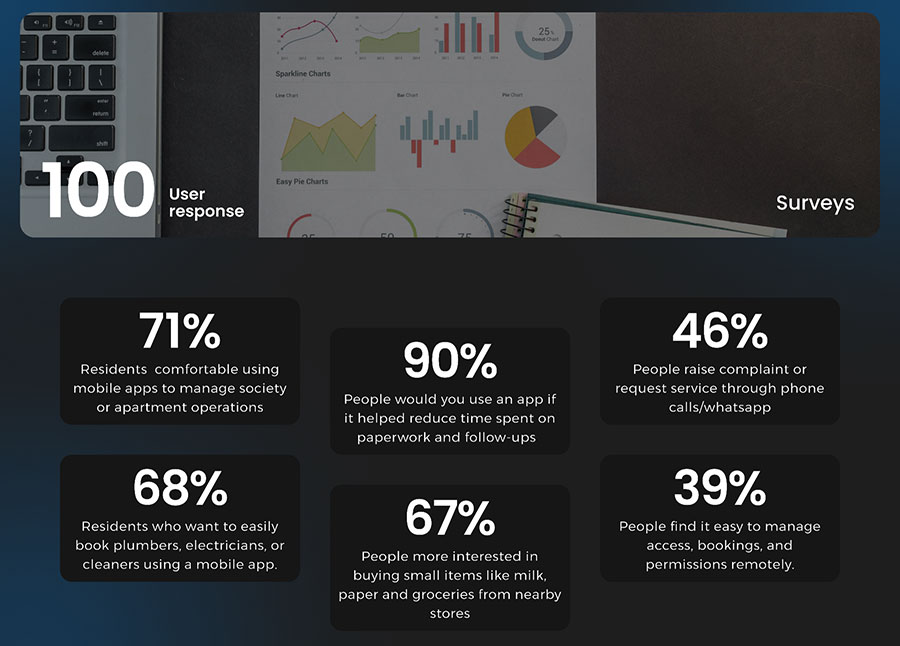
Good design starts with user research. I conducted interviews with tenants and landlords, uncovering their pain points and expectations. Key findings included:
- Users prefer simple, intuitive interfaces
- Timely reminders reduce missed tasks and payments
- Transparency builds trust between tenants and landlords
- Local discovery features add real-life value
These insights shaped the foundation of RESIDO's UX strategy, ensuring the app is not only functional but genuinely user-friendly.
UX Design: Building a Human-Centered Experience
Before creating visuals, I focused on UX fundamentals:
- User Personas: Represented both tenants and landlords
- Empathy Maps: Captured users' thoughts, feelings, and actions
- User Journey Maps: Highlighted friction points in current residential management methods
- Information Architecture: Organized features logically
- User Flows: Streamlined key actions such as rent payment, complaint tracking, and booking services
This structured approach ensures every interaction is intuitive, accessible, and efficient.
Wireframing: Structuring the App
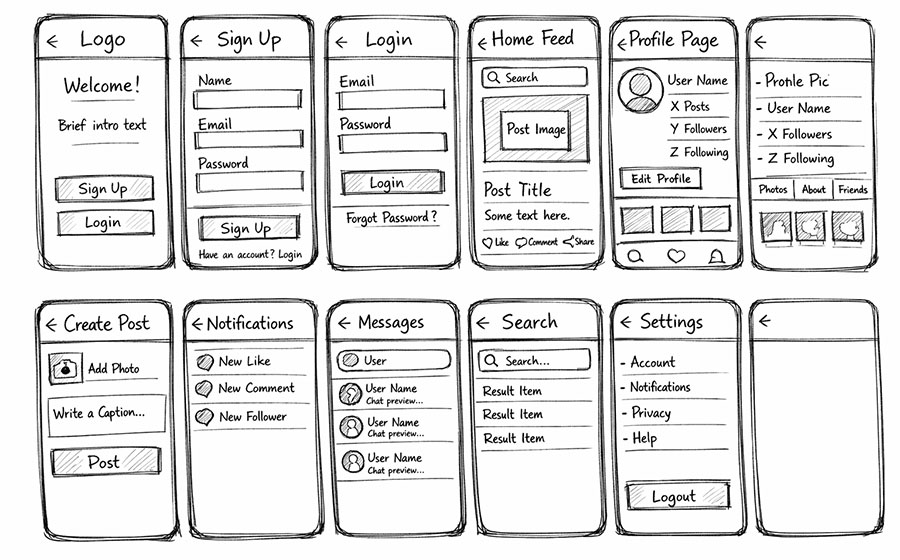
Wireframes acted as the blueprint for RESIDO:
- Low-fidelity wireframes prioritized function over visuals
- Layout iterations ensured simple navigation and minimal cognitive load
- Accessibility considerations were integrated for all age groups
Wireframing helped visualize the user journey, making sure the app's structure matched user needs.
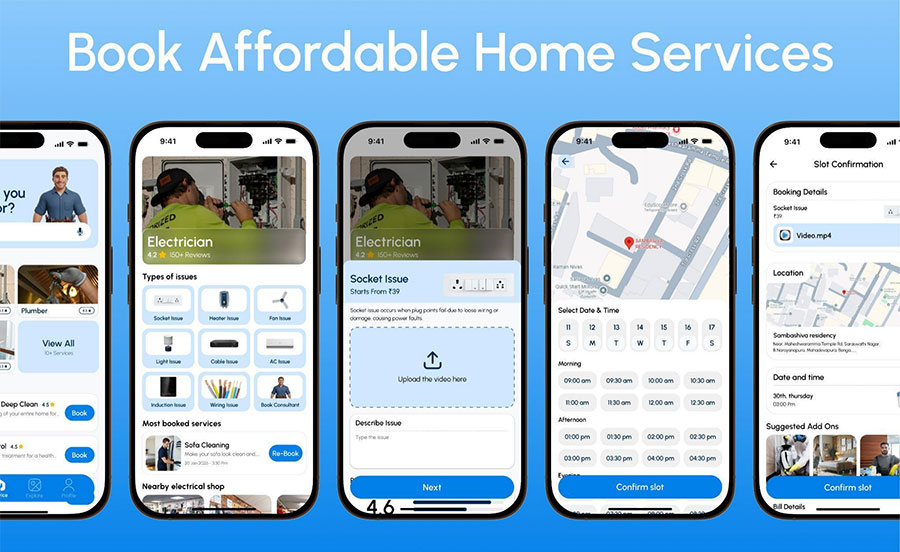
UI Design: Bringing RESIDO to Life
Using Figma, I designed a clean and approachable interface:
- Color Palette: Soft, minimal tones for a calm experience
- Typography: Readable and consistent fonts
- Components: Standardized buttons, cards, and icons for consistency
- Visual Hierarchy: Clear spacing and layout for intuitive navigation
Every UI decision focused on enhancing usability while maintaining a visually appealing and professional look.
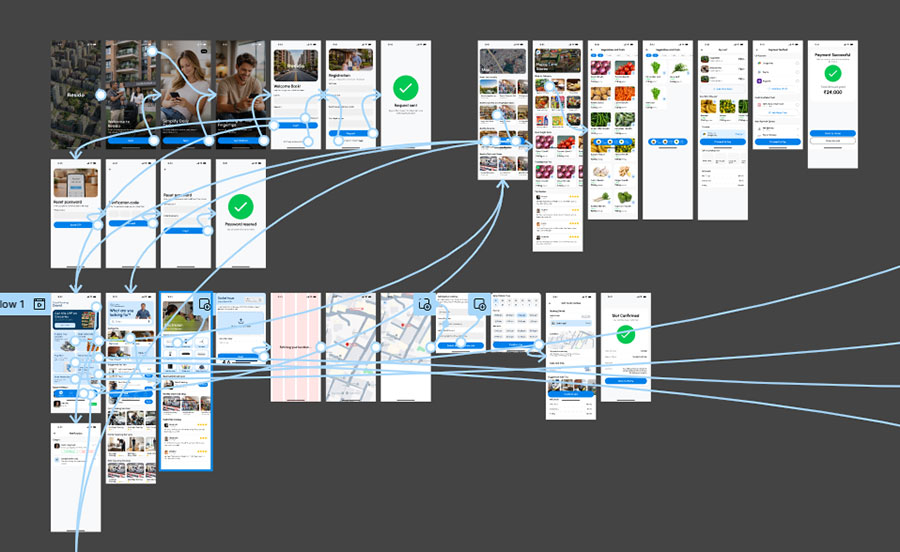
Prototyping: Testing Real Interactions
Interactive prototypes simulated real user flows:
- Paying rent and tracking dues
- Raising and monitoring complaints
- Booking services and amenities
Prototyping allowed me to identify usability issues, optimize navigation, and test micro-interactions like button feedback and transitions, creating a frictionless user experience.
Showcasing the ICAT Journey
The final stage of RESIDO involved presenting both the UX case study and the UI designs. This included:
- Research insights and user interviews
- Wireframe iterations
- UI exploration and design system
- Interactive prototypes and usability testing
I am grateful for the opportunity to showcase RESIDO at the ICAT College Graduation Showcase at Mantri Square Mall, where faculty, industry professionals, and visitors provided encouraging feedback. Their insights not only validated the project but also boosted my confidence as a UI/UX designer ready to tackle real-world challenges.
Conclusion: RESIDO as a Real-World Solution
RESIDO is a user-centered residential management app designed to simplify tasks, enhance communication, and create a seamless living experience for tenants and landlords. Through a combination of research, UX strategy, UI design, and prototyping, I created a solution that is practical, intuitive, and visually appealing.
This project demonstrates the power of UI/UX design in solving everyday problems and reflects the comprehensive training at ICAT College of Design and Media.
You can explore more student UI/UX design blogs to see how innovative ideas are brought to life.