
Explore the making of Cipher Arcade, a cyberpunk VR arcade simulation built for Meta Quest. Discover gameplay design, VR mechanics, and student game development insights.
Building a world in your imagination is one thing but stepping into it is an entirely different experience. I still remember the moment we compiled the final VR build of Cipher Arcade. Standing in its rain-soaked, neon-lit entrance, I paused taking in how a simple concept had transformed into a living, immersive world.
Cipher Arcade became more than just a project for Team Mavericks at ICAT College of Design & Media. Built as a single-player VR simulation for the Meta Quest, it stands as the culmination of years of learning, late nights, and continuous iteration.
As the game designer and team lead, my goal was clear yet ambitious: to create a challenging and engaging experience built around a unique, skill-based economy proving that our classroom knowledge could stand strong in real-world game development.
Finding the Core Concept: From 20 Concepts to 1 Vision
Before Cipher Arcade took shape, we spent weeks exploring over 20 different game ideas from playful 3D puzzle platformers to high-speed dystopian parkour concepts. But nothing felt right until we asked ourselves a simple question: what do players truly enjoy?
We realized many VR games lacked physical depth, often feeling "floaty" or overly passive. We wanted something more grounded where players could feel the effort behind every action, from throwing a basketball to drawing a bow. This led us to combine skill-based physical gameplay with a rich cyberpunk and neo-noir atmosphere.
And that's how Cipher Arcade was born, an underground world where progression isn't given, but earned through pure player skill.
Gameplay Design: The Psychology of Progression
Cipher Arcade breaks away from traditional games by introducing a Gated Progression Economy, where nothing is given for free.
Players begin with just 50 credits, limited access, and a single option Tier 0 Darts. Each match costs credits to play, making every decision important. Winning rewards you, but progress depends entirely on your skill and consistency.

This early struggle becomes the heart of the experience. Players must improve, manage resources, and carefully build their way up. Only by saving enough credits can new zones like the Archery range be unlocked.
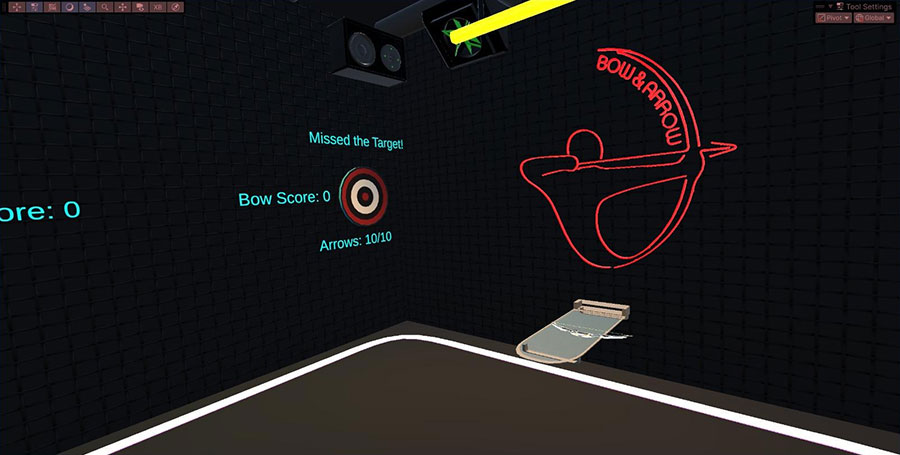
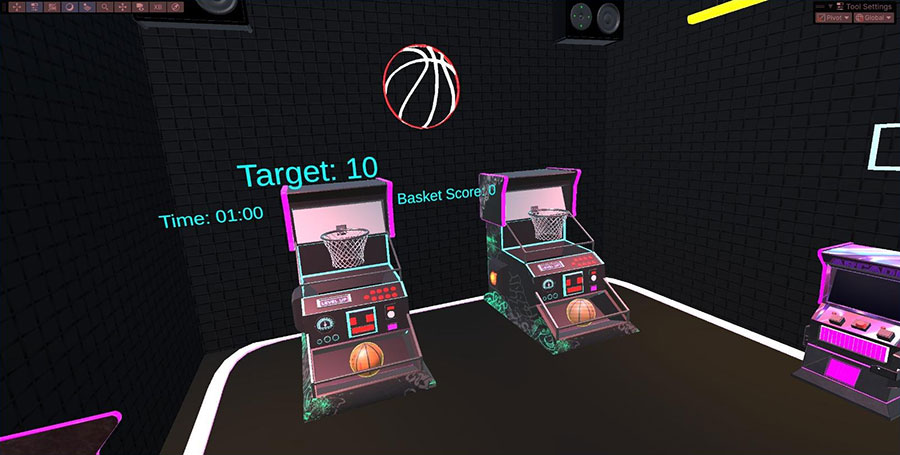
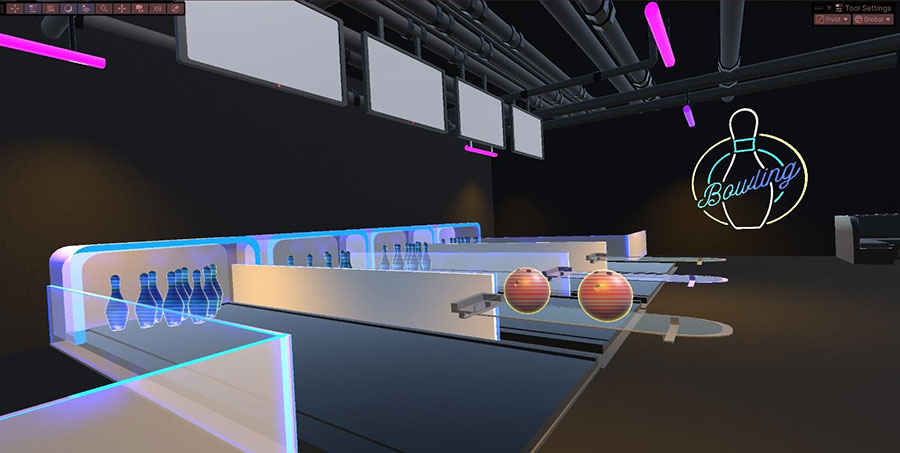
Visual Design: Painting with Neon and Shadows
The look and feel were absolutely central to the heart of Cipher Arcade. We wanted players to feel that "ahh" moment of relief by stepping into the warm, welcoming, and intentionally well-lit interior from the fog-filled exterior.
Creating the 3D assets was a constant challenge. The cyberpunk vibe was achieved primarily through texturing: leaning heavily on emissive materials for those vibrant neon glows, and then contrasting sleek, shiny metal with scuffed, worn-down textures. This sold the idea of a world that is both high-tech and utterly gritty.
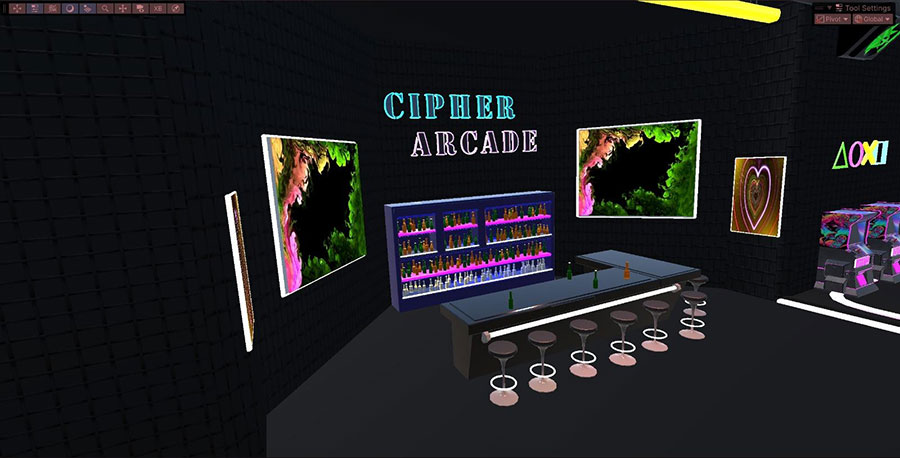
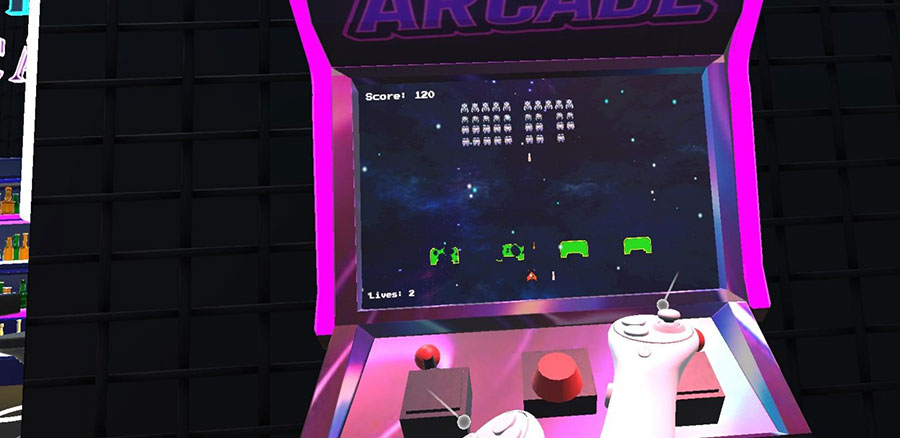
One neat "dev hack" we were particularly proud of was how we handled the animated LED walls. Instead of complex 3D models, we smartly used Unity's Video Player and Render Textures to project dynamic, looping videos onto the surfaces. We also made an arcade machine minigame, a space shooter inside the virtual reality world, which felt nostalgic for the older audience.
Presenting Cipher Arcade at the ICAT College Graduation Showcase held at Mantri Square Mall was a major highlight. Seeing players step into the world, physically engage with the mechanics, and react to the environment was incredibly rewarding. From industry professionals to casual players, the feedback helped validate our vision. Players appreciated the realism, progression system, and immersive atmosphere proving that meaningful interaction can elevate VR experiences.
Conclusion & Final Outcome
Cipher Arcade helped us grow across VR interaction design, game economy systems, environmental storytelling, and team collaboration. More importantly, it shifted our mindset from simply building features to crafting meaningful player experiences, and from ideas to real execution.
The project stands as a fully realized VR simulation where skill drives progression, atmosphere builds immersion, and interaction fuels engagement. Players don't just play; they earn, learn, and improve with every session.
More than just a student project, Cipher Arcade proves that strong design, technical execution, and teamwork can transform a simple idea into a living, immersive world.
Explore more student project blogs to see how innovative ideas are brought to life.