
Explore the making of Astro-Tanks, a physics-driven multiplayer space combat game. Learn about 3D design, gameplay mechanics, and student game development at ICAT college.
About the Project
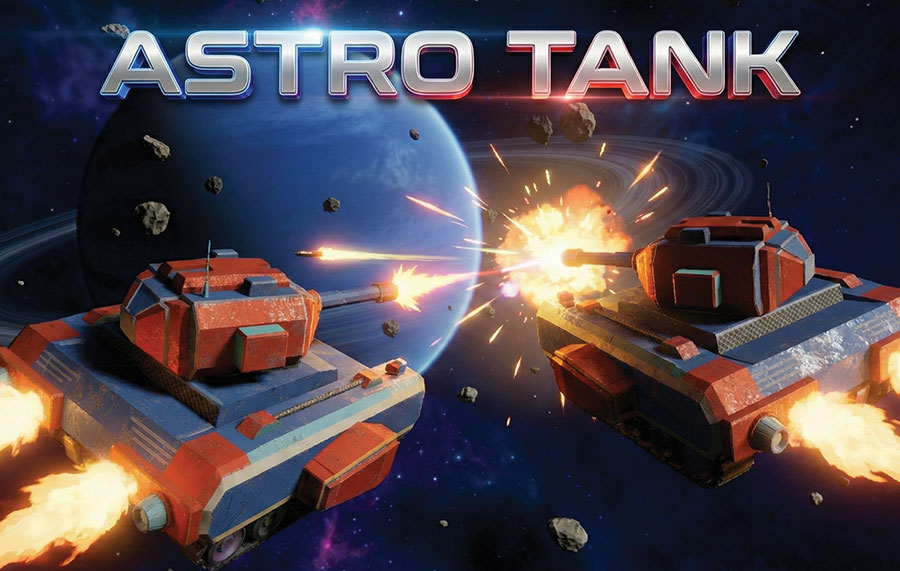
Astro-Tanks is a multiplayer 5v5 space combat game where players control massive, drifting war machines instead of sleek spacecraft.
Team FG2G
- Game Designer, Level Designer & Sound Designer: Raunak Sinha
- Game Developer & Technical Art: Jashwanth SR
- 3D Artist: Nayan Bandu Tupe
- UI Artist: Hrishikesh
- Web Developer: Syed Roshan Ahmed
The Journey to Create Astro-Tanks
Every year, multiplayer games lean toward either realistic space simulations or fast-paced arcade combat. But in my workspace in Bangalore, Astro-Tanks began as an attempt to break that divide. Instead of speed, the focus was on weight, physics, and impact turning heavy 3D tanks into drifting battering rams in space. More than just a visual concept, the game became a mechanical experiment, exploring how raw, physics-driven combat can create a unique and immersive player experience. Here is a look at the step-by-step process of how we built it.
Phase 1: Subverting the Space Shooter
The worship of weightless speed is common across the sci-fi multiplayer genre, but our first goal was to subvert it. Unlike traditional shooters that unfold in neat, predictable frames of instant acceleration, the story of an Astro-Tanks match needs to be wildly unpredictable and intensely violent.
Imagine the opening seconds of a 5v5 Full War skirmish. You aren't stepping into a sleek starfighter; you are strapped into a bolted-together, oil-stained, Piecraftian dieselpunk war machine. The silence of the vacuum is absolute, save for the bass-heavy, muffled thrum of the engine conducting straight through your own steel hull.
The Mechanics of a "Flying Brick"
- Six Degrees of Freedom (6DOF): You possess full rotational and directional control, but you are not flying—you are drifting.
- Linear Damping: We implemented artificial space drag that slowly bleeds your speed. Pushing the throttle engages the main thrusters, but releasing it doesn't instantly stop you.
- Counter-Thrusters: To stop on a dime and avoid debris, players have to intentionally fire dorsal or ventral counter-thrusters. Movement becomes a deliberate dance of mechanical counter-forces.
Phase 2: Shaping the Arena and the Fleet
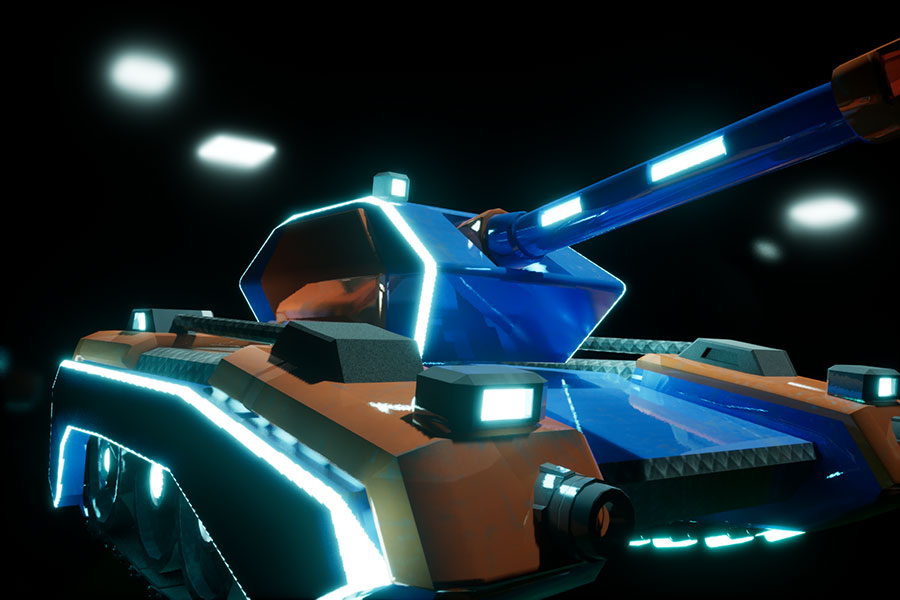
With movement locked in, the tactical reality of the asteroid field sets in. We designed a sprawling expanse of destructible rock to offer both salvation and peril. Small asteroids shatter instantly against a hull, but massive 15,000 HP monoliths serve as floating fortresses.
Next, we had to define the glass cannons and the workhorses of the fleet:
- The Scout (Light Tank): At 70 km/h, it's the fastest thing in the sector. But with a frail 10,000 HP pool, it requires flawless piloting.
- The Assault (Medium Tank): The backbone of the fleet, boasting 15,000 HP and a rapid 4-second reload on its main cannon firing Armor Piercing (AP) rounds at 1,300 meters per second.
The "Recoil Jump" Maneuver We tied weapon physics directly to movement. If a Mosquito is targeted by a Bulldog's AP round, they don't have the armor to absorb it or the time to turn. Instead, the player can fire their own main cannon into empty space. We programmed the recoil to transfer 10% of the bullet's kinetic force directly into the low-mass chassis, violently shoving the tank backward. It's an emergent survival mechanic—using a weapon not to destroy, but to snap out of a trajectory.
Phase 3: Engineering the Heavyweight
As players drift toward King of the Hill capture zones to generate points, the sensory landscape shifts. We wanted to introduce a threat that dictated the flow of the match purely through its presence.
Enter the Juggernaut (Heavy Tank) We utilized a haunting auditory illusion—a Shepard Tone—that rises through the audio channels, vibrating with terrifying intensity. It signals the arrival of a 30,000 HP behemoth that shatters 5,000 HP asteroids just by drifting through them. The Juggernaut ignores the chaotic physics governing lighter ships, taking 70% less knockback from standard weapons.
The Crucible of Networking As a Game Designer, 3D Artist and Pixel Artist, getting the Juggernaut right was the crucible of the project. If this massive tank rams a target, the networking architecture has to be flawless. We spent countless hours ensuring client-side prediction and server reconciliation synced perfectly, honoring the attacker's momentum without causing jarring rubber-banding for the victim. It had to feel visceral and heavy.
Phase 4: Balancing the Arsenal for Impact
The Juggernaut doesn't use a cannon; its chassis splits open to reveal a massive, grinding melee drill. To counter this, we had to balance the weapon types carefully:
- High Speed Anti-Tank (HSAT) Lasers: Useless against the Heavy Tank's charge, dealing 20% less damage with zero knockback.
- High Explosive Shock Wave (HESW): The space shotgun. It deals minimal damage but possesses immense concussive force. It is the only weapon capable of negating the Heavy Tank's resistance, violently pushing the beast off its trajectory at point-blank range.
In the brief pause after an HESW shockwave, the battlefield breathes. This creates moments where players must think strategically rather than rely purely on aim.
This innovative approach reflects the experiential learning from Game Design Course at ICAT College of Design & Media, where gameplay is designed around interaction and immersion.
The Climax: A Mechanical Symphony
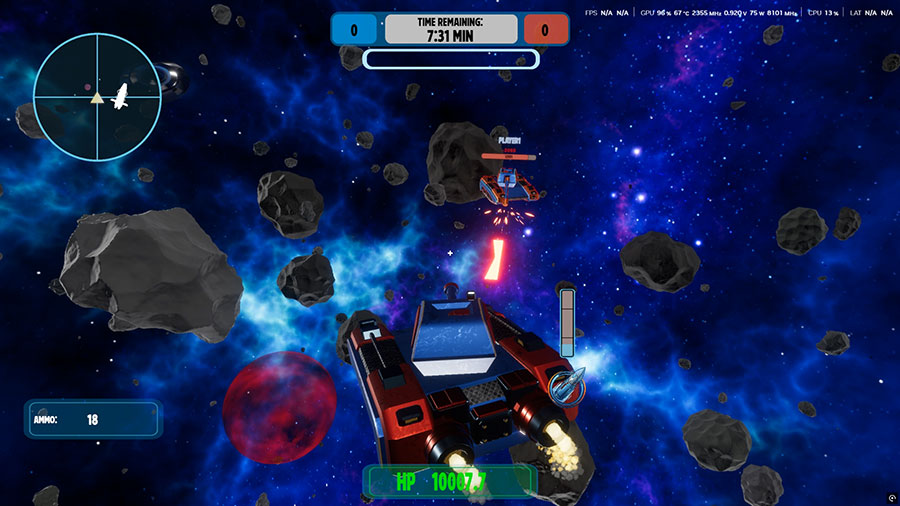
The most powerful moment in Astro-Tanks happens when two Juggernauts collide. Instead of bouncing apart, they lock together in a violent stalemate. Their drills grind against each other, dealing continuous damage while neither side gives way. Around them, lighter tanks move through the chaos, creating a dynamic and layered battlefield. This moment captures the essence of the game where physics, mechanics, and player decisions come together to create something intense and memorable.
Conclusion
Astro-Tanks is not just a multiplayer combat game, it is an exploration of how physics can shape gameplay and storytelling. From drifting movement to recoil-based mechanics and large-scale collisions, every system was designed to make combat feel impactful and alive.
Presenting Astro-Tanks at the ICAT College Graduation Showcase held at Mantri Square Mall gave players a real-time experience of its physics-driven combat. Watching them react to drifting movement and intense Juggernaut encounters helped refine gameplay feel, controls, and balance, turning the project into a more polished, player-tested multiplayer experience.
Explore more student project blogs to see how innovative ideas are brought to life.