
Discover how a game design team built License to Kill, a stylized top-down action game focused on systems, speed, and gameplay feel. A real student project from ICAT College.
Violence Is Fun Until It Isn't
This project didn't start with License to Kill. It started with confusion.
Too many ideas. Too many directions. Concepts that sounded exciting but didn't stick. We weren't building a game yet. We were circling around one. Twenty ideas in, and we still didn't have it.
For the first time, we couldn't settle early. We had to sit with uncertainty. Push through weak ideas. Kill concepts we liked. Question everything, not just what we were making, but why.
What did we have in us to make something that displays our full potential?
Why this concept and not the 19 others on page and around a million more in our minds?
How do we go on about making it a reality and how do we stand out?
Finding the One Idea That Survived
Somewhere in that process of elimination, we were closing in on a winner, and ultimately we were left with License to Kill.
Violence. Speed. Style. Systems that felt immediate.Gameplay that could have an identity around it, we crowned this concept our winner.
What Is License to Kill
License to Kill is a top-down action game set in a world where killing isn't hidden, it's celebrated. Assassins aren't criminals. They’re icons. They're ranked, watched and remembered.
You play as The Blade, someone trying to climb that system.
That tone, this mix of satire and brutality was what made the project feel sharp. It wasn't just about gameplay. It had something to say, even if that "something" was uncomfortable.
As a designer and artist on the project, my role focused on:
- Gameplay systems
- Implementation
- Visual direction
The goal was to make the game feel like it celebrates violence from the inside while still feeling unsettling from the outside. This innovative approach reflects the experiential learning from Game Design Course at ICAT College of Design & Media, where gameplay is designed around interaction and immersion.
The Part No One Talks About: Killing Ideas
Coming up with 20 concepts sounds fun. And it is, for the first few that is. After that, it gets exhausting. Because ideas stop being precious.
You stop asking "is this cool?" and start asking
- Does this actually hold up?
- Can this scale?
- Can we finish this?
Most of our ideas didn't survive that phase.
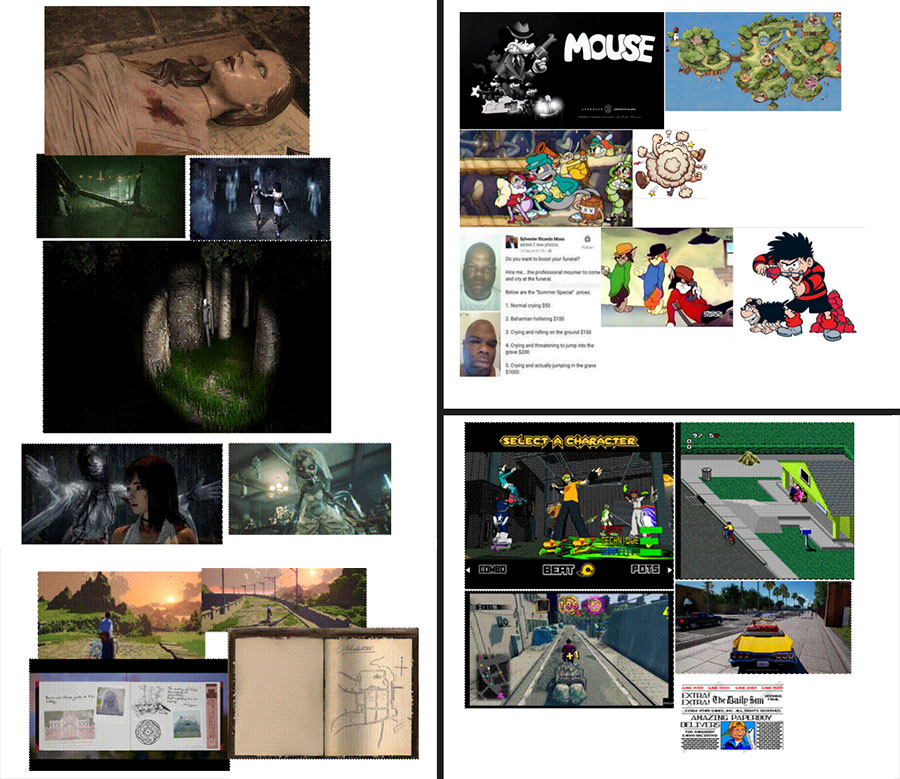
And that was the real lesson. Good projects aren't built by picking the best idea. They're built by eliminating the weak ones. No matter how much it hurts your ego , you have to pick them apart and put them up to the chopping block.
License to Kill stayed because it had a core that didn't collapse:
Movement. Attack. Reaction.
Simple. Brutal. Expandable.
Building Systems That Actually Work
Once the idea was locked, reality hit. Ideas are easy. Systems aren't.
A fast-paced action game lives or dies on how it feels. Not how it looks or sounds. If movement is off, attacks lag, or feedback isn't clear; the experience breaks. And ours did.
The first build failed. It felt awkward, unresponsive, and unsatisfying. So we stopped everything. We scaled back the narrative, cut the excess, and focused only on what mattered:
- Movement that responds instantly
- Attacks that feel decisive
- Interactions that don't hesitate
We rebuilt the gameplay from the ground up. Because if your systems can't handle change, they break. And when they break, you start again.
Designing Enemies That Fight Back
A game like this needs resistance. Enemies couldn't just exist, they had to demand something from the player.
We designed behaviors:
- Enemies that rush you
- Enemies that control space
- Enemies that punish hesitation
Each one forced a different response. Balancing them was constant work. Every time things felt right, players would break them in unexpected ways. So we iterated. Again and again. Because balance is never perfect; it just gets closer.
The Hybrid Problem That Almost Broke Us
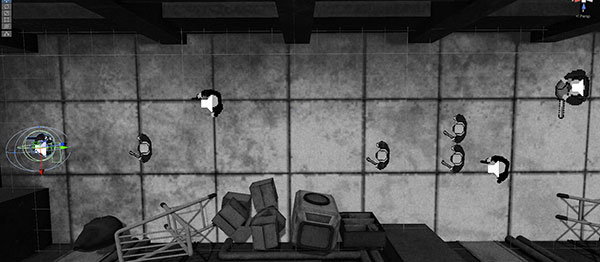
One of the most complicated decisions we made was going hybrid. Two dimensional characters and gameplay but in a three dimensional world.
Sounds simple right? It isn't. We wanted expressive characters with environmental depth, but it brought challenges like assets that didn't naturally fit, collision issues, inconsistent interactions. It created friction. But it also gave the game identity. Once it started working, it stopped feeling generic, it had presence.
Why Noir Became a Necessity
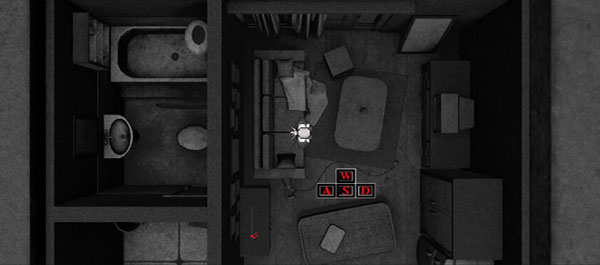
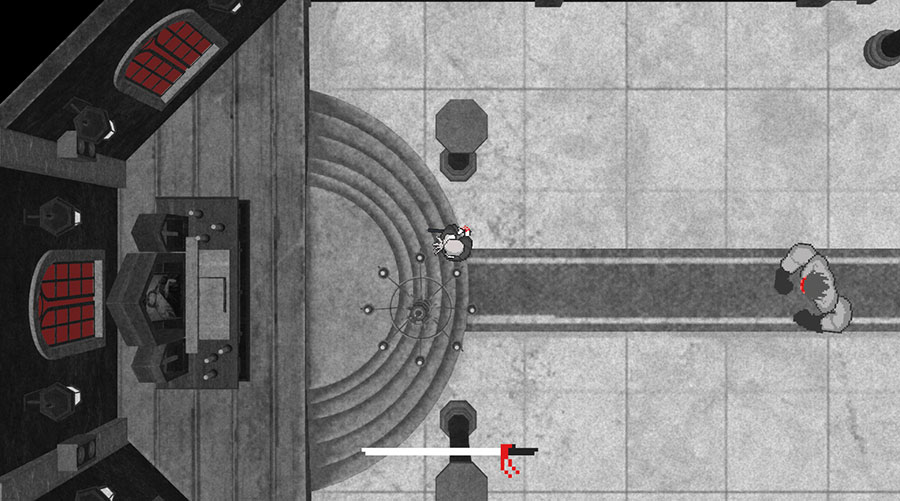
We didn't choose noir just for style, we chose it because it solved problems. Fast-paced games need clarity. Players shouldn't search for information; they should see it instantly.
Noir gave us:
- Strong contrast
- Clear silhouettes
- Immediate readability
But pushing noir too far breaks the game. Too dark, and the player loses information. Too flat, and the mood disappears. So again we deal with the ever present nightmare of balance.
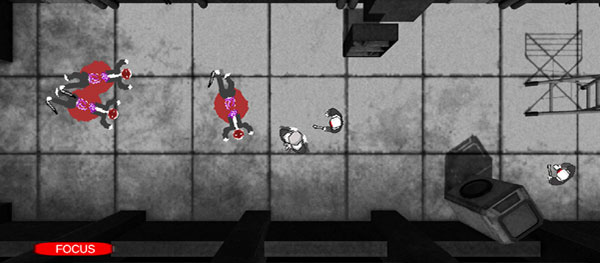
Balance Lighting and shadows, the contrast of light and dark, enemies and objects and especially the difference of the living and the departed, with splashes of red and gore.
From a technical side, this meant constant iteration. Adjusting how light behaves. How surfaces react. How everything reads in motion.
Because if players have to think about what they're seeing while trying to survive, you've already lost them.
The Reality of Collaboration
Nothing in this project existed in isolation.Design affected art. Art affected readability. Code affected everything. And sometimes, things just didn't work. Ideas had to be cut. Systems had to be rebuilt. Plans had to change. The concept we wanted was not the concept we completely got, but I am glad we got something close and something coherent.
What This Project Taught Me
This project wasn't about ideas, it was about execution. It was my first time working at this scale, not a short game jam but months of development where mistakes don't get forgiven. Over time, I learned how to turn vague ideas into something real, build systems that actually hold up, work through uncertainty without rushing decisions, and let go of ideas that didn't serve the project. Most importantly, I learned how to finish something. Even during the worst moments when nothing seemed to work, the team kept pushing forward. And in the end, seeing people play, react, and genuinely enjoy the experience made it all worth it.
Conclusion: Showcasing the Game
License to Kill was presented at the ICAT College Graduation Showcase held at Mantri Square Mall, where the project finally moved from development into the hands of real players. Watching new players step in, figure things out, and adapt to the systems in real time was one of the most rewarding parts of the journey. The showcase wasn't just about presenting a finished game; it became a space for honest feedback, meaningful design discussions, and observing how players actually engage with what we built. It turned months of work into something tangible, something people could experience and respond to.
Explore more student project blogs to see how innovative ideas are brought to life.