
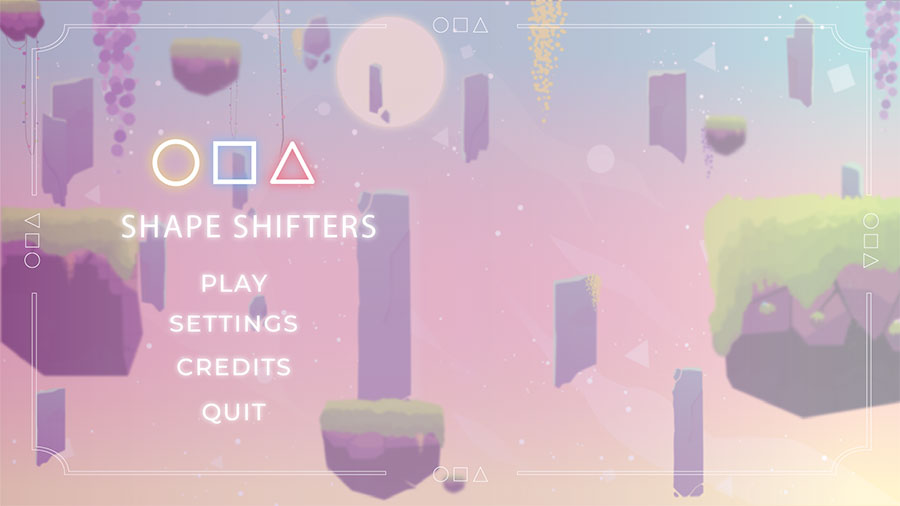
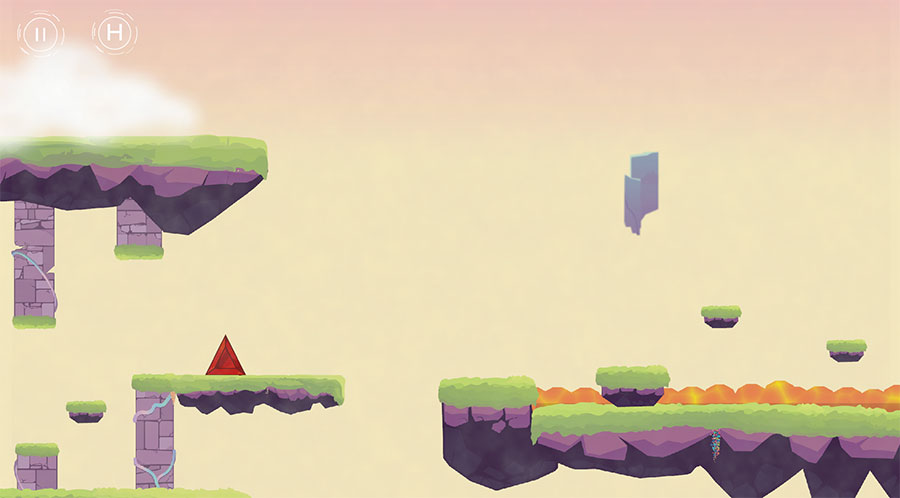
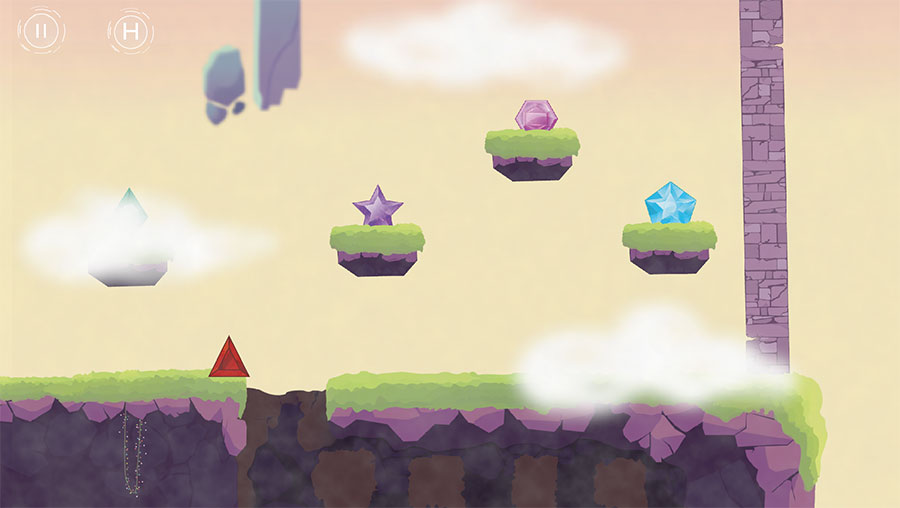
As I approached my final year in game development, I knew I wanted to build something that reflected how I think as a designer. I didn’t want to make just another game, I wanted to create an experience that pushes players to communicate, think, and solve problems together. That idea became Shape Shifters, a cooperative puzzle-platformer centered around teamwork and clarity.
This project became more than a requirement for graduation. It became a space where I explored design decisions, learned from failure, and understood how players actually interact with what I create.
Why a Co-op Puzzle Game?
I chose to build a co-op puzzle game because the co-op space is at its peak right now. There’s something genuinely engaging about playing with others especially when the game encourages players to think together rather than act individually.
Adding puzzles to this format creates moments where communication and coordination become the core of the experience.
A major inspiration for this project was Kirby and the Rainbow Curse. Its ability to combine simple mechanics with creative interaction influenced my approach to designing systems that are easy to understand, yet engaging to explore.
As the game designer, my role focused on shaping the core experience designing mechanics, structuring levels, and ensuring clarity in every interaction.
At the center of this process was one key question:
Does this puzzle force players to work together?
Collaboration played a crucial role. The 2D artist ensured visual clarity and readability, while the programmer translated ideas into functional systems. Many design decisions only became meaningful through this teamwork.
Designing Puzzles
Designing puzzles was the most rewarding part of the project.
There’s something incredibly satisfying about building a challenge and watching someone solve it. During the graduation showcase, observing players pause, think, communicate, and finally succeed was one of the most fulfilling moments of the entire journey.
It also revealed how differently players approach problems:
- Some rely on logic
- Some experiment freely
- Others depend heavily on communication
This diversity in player behavior provided valuable insights.
Level design played a critical role in shaping the experience. Levels were structured to gradually introduce abilities before combining them into more complex challenges.
- Early levels focused on simple mechanics
- Later levels required coordination of multiple actions
The goal was to maintain a smooth learning curve while keeping players engaged.
Another important focus was ensuring constant player involvement. In co-op gameplay, inactivity quickly becomes frustrating, so levels were designed to allow multiple players to act simultaneously.
The Biggest Challenge
The most difficult challenge came from the co-op system itself.
At one stage, the cooperative mechanics were not functioning as intended. This required rethinking key aspects of the design and adapting the game to work even in a single-player context.
While frustrating, this became one of the most valuable learning experiences. It reinforced the importance of flexibility in design understanding that ideas must evolve when they don’t work as expected.
Another challenge was puzzle clarity. Some early designs were confusing not because they were complex, but because they lacked clear communication.
To address this, we improved:
- Visual cues
- Path clarity
- Interaction readability
These changes significantly improved player understanding.
Balancing abilities was another hurdle. At times, one character felt more useful than others. Adjustments were made to ensure each ability had a clear and necessary role within the gameplay.
Graduation Showcase
Presenting Shape Shifters at the ICAT College Graduation Showcase held at Mantri Square Mall allowed real players to experience the cooperative gameplay firsthand. Watching them communicate, coordinate, and solve puzzles together provided valuable insights into player interaction, puzzle clarity, and teamwork dynamics turning the project into a real-world, user-tested experience.
Conclusion
Shape Shifters reflects a hands-on approach to learning, where ideas evolve through experimentation, collaboration, and real player interaction. Looking back, it’s not just a finished project, but a journey that strengthened my understanding of cooperative design and reinforced my passion for creating games that bring people together and challenge how they think.
Explore more student student project blogs to see how innovative ideas are brought to life.