
Picture this: You are deep into a thrilling mobile showdown, thumb flying across the screen as your hero dodges lasers and unleashes a combo attack. The enemy swarm reacts instantly, scattering just right, while the physics make every leap feel gravity-defying yet real. That seamless magic? It is all thanks to programming—the invisible engine driving every pixel-perfect moment in modern games. Programmers are not just coders; they are the creators turning wild ideas into immersive realities. For aspiring creators at ICAT College of Design and Media, mastering code is not optional—it is the passport to a career in the game industry.
Stunning visuals and clever storytelling could grab headlines, but without rock-solid programming, a game is just pretty wallpaper. Think of code as the game's beating heart: it processes your inputs, crunches physics calculations, and keeps thousands of on-screen elements humming in sync. Press jump, and in a blink—often under 16 milliseconds for buttery 60fps gameplay—the program checks your footing, ramps up velocity, triggers a fluid animation, and even tweaks momentum based on wind or terrain. Static art cannot do that. Poor code leads to glitches, like characters phasing through walls or controls that feel like wading through mud. Game studios in India to global giants like Electronic Arts hunt relentlessly for programmers who make worlds not just look alive, but truly breathe.
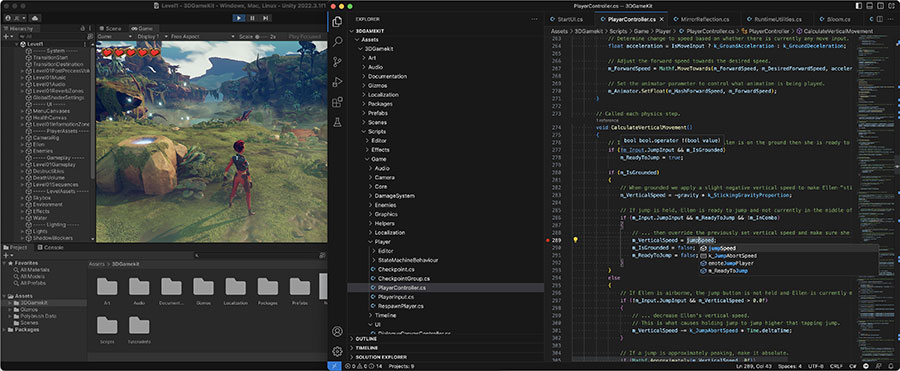
Figure 1: Making character movements using the Unreal Engine and C++.
Coding Gives Life
Gameplay's soul comes alive through code, dictating everything from sprint speeds to epic boss fights. Want a shooter where bullets ricochet realistically off shields? That is scripted collision detection. Craving progression where unlocking a new level floods the screen with programming prowess. Of late, developers coded adaptive combat systems that evolve with player style—aggressive types face horde rushes, and stealth fans get shadowy ambushes. Nail this, and your game hooks millions. Top firms prioritise coders who blend creativity with precision.
What elevates today's games from fun to unforgettable is programming's wizardry in physics and AI. Physics engines mimic Earth's rules: gravity tugs parachutes downward, car tires skid on rain-slick roads, ragdoll bodies crumple on impact. Tools like Unity's PhysX or Unreal's Chaos system handle the math, letting a soccer sim curve free kicks. Then there is AI, the secret sauce for smart foes. Non-player characters do not just wander—they learn. In survival horrors, zombies flank you intelligently, adapting to your flashlight patterns; in strategy epics, AI generals outsmart armies with predictive algorithms. AI-driven dynamism significantly boosts player retention, making games replayable and unpredictable.
Performance seals the deal—or breaks it. Gamers ditch laggy messes quickly, especially on budget phones dominating India's market. Expert programmers optimise code to slash load times, squash bugs via rigorous testing, and scale across devices from iPhones to low-end Androids. They profile memory usage, cull invisible objects, and leverage multi-threading for 120fps glory. It is not glamorous, but it is why smooth performers dominate app stores while crash-prone rivals fade.
Dream Jobs Unlocked
For students eyeing this gold rush, programming unlocks dream jobs: game programmer, Unity specialist wielding the latest 6.0 engine, Unreal wizard crafting VR realms, mobile dev for PUBG-like phenoms, or AI guru scripting next-gen bots. Chennai hubs like ICAT are churning out talent. But theory alone will not cut it—success demands hands-on hustle. Start with C# or C++ basics, dive into Unity/Unreal engines, then build: a simple platformer escalates to a full-fledged multiplayer arena. Internships at top game studios are arranged for gaining real-world grit and honing logic under deadlines. Ace coding tests, demo your projects, and boom—you are in.
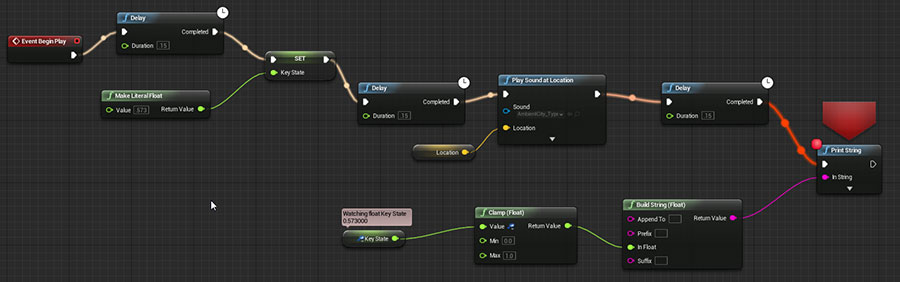
Figure 2: Developing mechanics using the Unreal blueprints.
Industry readiness goes beyond syntax. Cultivate razor-sharp logic to untangle thorny bugs, relentless problem-solving for midnight fixes, and daily practice via challenges. Grasp mechanics like balancing difficulty curves, collaborating in team sprints, and summoning patience. As one ICAT alumnus, now at a top studio, puts it: "Code teaches resilience; games teach joy."
In gaming's electric evolution, programming is not a side skill—it is the core that births empires. Students swap controllers for keyboards. With smart projects, grit, and code mastery, you will evolve from player to pioneer, scripting tomorrow's blockbusters.
Patience is also very important. Programming involves debugging and fixing errors, which takes time. The more you practice, the better you become. In the end, the people who understand programming are the ones who shape the future of gaming.
In gaming, those who master code don't just play the game—they create it.