

When I was doing my project research, I visited the Tsunami Quarters in Ennore to understand the living conditions of the children there. I spent time observing how they live and interact with their surroundings. One thing that really stood out to me was that many of them did not have proper places to study. Most of the houses are small and shared by several family members, which makes it difficult for children to find a quiet and comfortable place to do their schoolwork. Even simple things like reading a book or doing homework can become a daily challenge. Seeing this situation is what inspired me to choose this topic for my project.
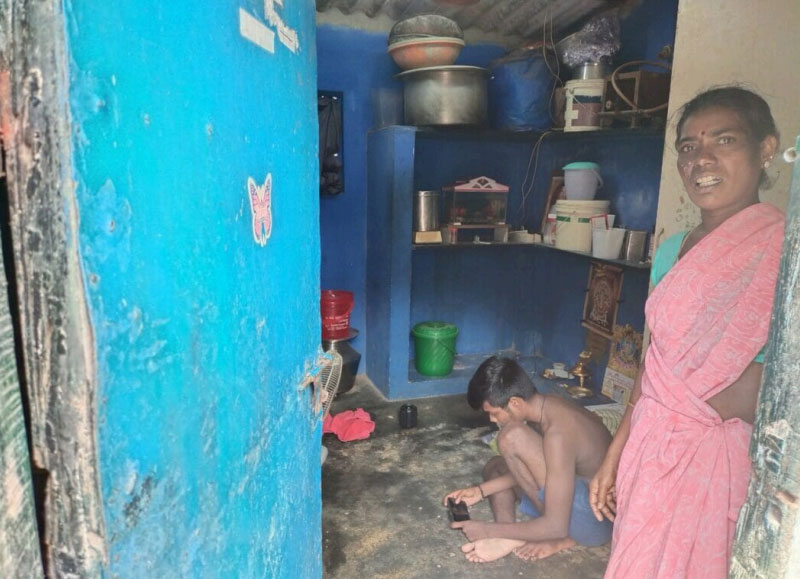
Figure 1. Inside a compact home in the Tsunami Quarters, limited space makes it difficult for children to find a quiet place to study.
My project, Learning Hub 'Karpidam', explores how design can help address these challenges. I wanted to create a space where children can come together to study, interact with each other, and feel motivated to learn. I did not want to design a typical classroom. Instead, I wanted to create a flexible and welcoming environment where students can focus on their studies while also interacting and learning from one another.
Understanding the Need
While studying the area in Ennore, I noticed that many students did not have a proper place to learn outside of school. At home, they often get distracted and do not have enough personal space to concentrate. This affects their ability to focus on their studies.
To understand the situation better, I also conducted surveys and collected testimonials from the children and residents in the area. Their responses helped me understand the real challenges they face while studying at home. Many students shared that they wished they had a quiet place where they could sit, study, and spend time learning with their friends.
Based on these observations and responses, I wanted to design a learning space that provides students with a comfortable and encouraging environment. The learning hub includes areas where students can study individually, work in groups, and participate in different learning activities. By bringing these functions together, the learning hub becomes more than just a study space – it becomes a community environment that supports both education and personal growth.
The concept of my project is inspired by cell division, which is a natural process that represents growth and development. I was drawn to this idea because learning is also a process of continuous growth.
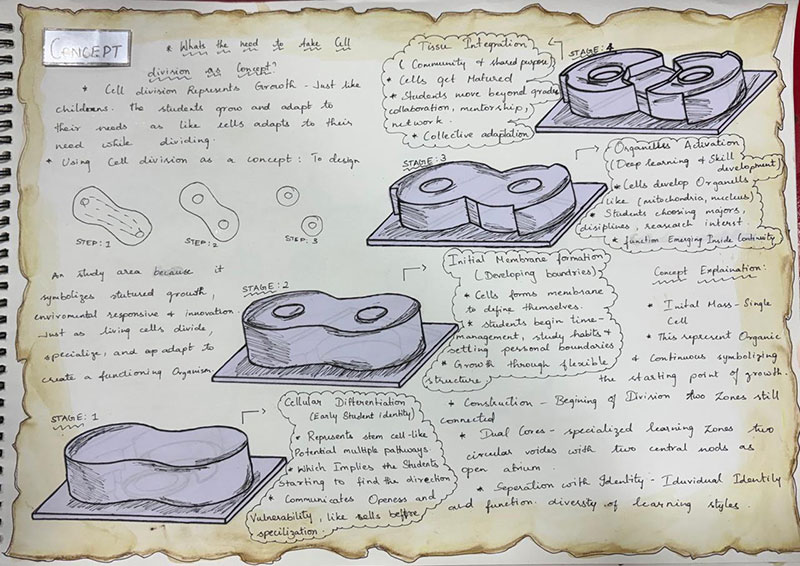
Figure 2. Concept development sketches inspired by cell division, illustrating how the spatial form evolves through stages to represent growth, connection, and the development of learning spaces.
Just like cells divide and form new structures, the spaces in the learning hub are designed to grow and connect with each other. Different areas branch out from a central idea, creating interconnected spaces that encourage students to move around, collaborate, and interact with one another.
A Bio-Futuristic Approach
To express this concept spatially, I explored a bio-futuristic design approach. This approach combines organic forms inspired by nature with futuristic spatial ideas.
Curved layouts, fluid connections, and dynamic forms help create an environment that feels innovative and engaging. Instead of rigid and enclosed spaces, the design focuses on openness and flexibility so that students can experience learning in a more interactive and inspiring setting.
Designing for Students
Students are the most important focus of this project. Every space within the learning hub is designed with their needs in mind – whether it is a quiet corner for studying, a collaborative space for group learning, or an area that encourages creativity and exploration.
Through this project, I wanted to explore how design can contribute to education and community development. My goal was not just to design a building, but to create a space where students feel comfortable, motivated, and inspired to learn.
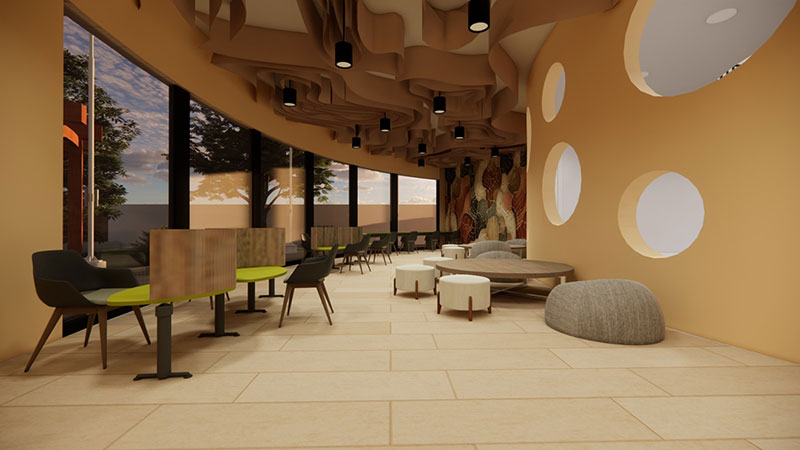
Figure 3. Render image of innovative corner area in Learning Hub 'Karpidam'.
For me, the Learning Hub 'Karpidam' represents the idea that the right environment can help children become more curious, creative, and confident. A supportive learning space can help them grow not only academically but also as individuals within their community.