
Photography is entering a new phase of transformation as artificial intelligence begins to influence the way images are captured, enhanced and creatively interpreted. Let us take a closer look at how this technology is shaping the present and future of photography.
Photography has always evolved alongside technology. From the early days of film cameras and darkrooms to the arrival of digital photography, every technological development has influenced the way images are captured and refined. Today artificial intelligence is bringing about another important change in the field of photography.
Artificial intelligence is gradually becoming part of several stages of photographic work, from selecting the best images to improving their quality and experimenting with creative effects. Earlier photographers depended largely on their technical knowledge and manual editing tools to perfect their photographs. Artificial intelligence now helps simplify many of these tasks. In many ways it works like a silent assistant that helps photographers save time and focus more on the creative aspects of their work. According to an article titled "5 Ways AI Will Affect the Future of Photography Editing & Culling" by Penelope Diamantopoulous published on the Imagen photography blog, artificial intelligence is transforming photographic workflows by analysing images and automatically adjusting elements such as exposure, colour and shadows, thereby making the editing and image selection process faster and more efficient. As the author notes, "the point of AI is to align with your personal vision, not to take you out of the picture."
Ways in Which Artificial Intelligence Helps Photography
Artificial intelligence supports photographers in several practical ways. It can help organise large collections of images, improve the visual quality of photographs and assist photographers in experimenting with new creative ideas. These tools are particularly useful for professionals who handle hundreds or even thousands of images during a single project.
1.Sorting and selecting the best photographs
One of the biggest challenges photographers face is managing large numbers of images after a shoot. For example a wedding photographer may return from an event with thousands of photographs. Going through each image and selecting the best ones can take several hours or even days. Artificial intelligence based software can quickly analyse these photographs, detect blurred images, identify closed eyes and group similar shots together. This helps photographers shortlist their best photographs much more efficiently.
2.Photo enhancement and editing
Artificial intelligence tools can also improve the quality of photographs by adjusting brightness, contrast and colour balance automatically. Modern editing software can recognise the subject in an image and apply corrections selectively. For example the lighting on a subject can be improved without affecting the background. Such features make the editing process quicker while still allowing photographers to retain control over the final image.
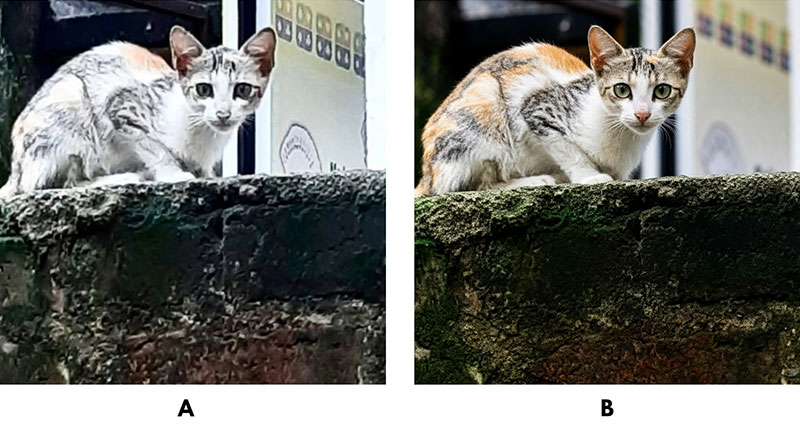
Figure 1: Artificial intelligence based enhancement of a photograph. (A) Original low resolution image of a cat. (B) AI enhanced version with improved sharpness, colour balance, contrast and overall clarity.
Source: Photo by author; AI transformation generated using ChatGPT.
3.Simulating artistic conditions
Artificial intelligence also allows photographers to experiment with different visual moods and lighting conditions. With the help of artificial intelligence editing tools photographs can be given dramatic lighting, soft tones or a cinematic look. Photographers can explore these artistic possibilities even if the original photograph was taken in simple lighting conditions.
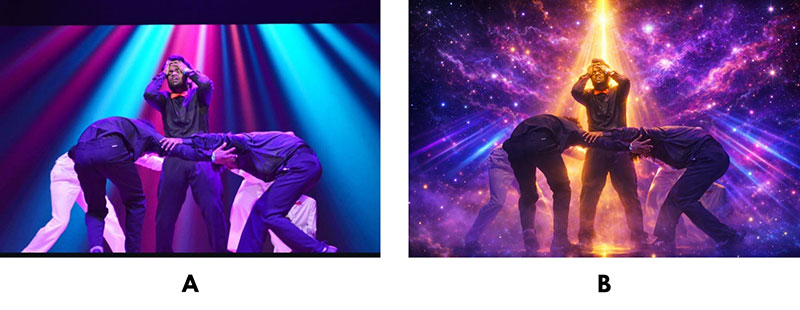
Figure 2: Simulation of artistic conditions using artificial intelligence. (A) Original stage performance photograph. (B) AI generated transformation showing a cosmic theatre atmosphere with dramatic lighting and celestial background. Source: Photo by author; AI transformation generated using ChatGPT.
4.Creating imaginative worlds from original photographs
Artificial intelligence also makes it possible to transform ordinary photographs into imaginative visual scenes. A simple photograph of a flower, landscape or building can be enhanced to create fantasy environments or artistic interpretations of the same image. By combining the original photograph with artificial intelligence generated elements photographers can experiment with storytelling and produce visually striking compositions.
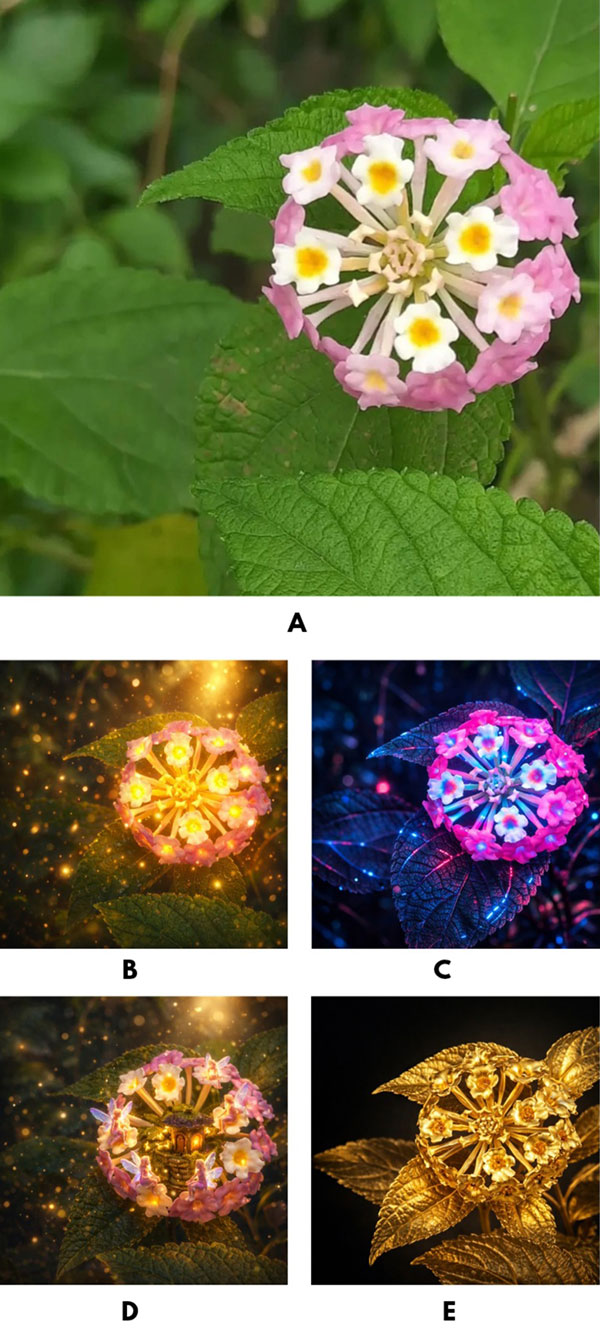
Figure 3: Creative transformations of a photograph using artificial intelligence. (A) Original image of a lantana flower. (B–E) AI generated artistic interpretations including fantasy lighting, cyberpunk style atmosphere, imaginative scene creation, and a golden sculptural transformation.
Source: Photo by author; AI transformations generated using ChatGPT.
5.Restoring old photographs
Another useful application of artificial intelligence is the restoration of old or damaged photographs. Artificial intelligence systems can remove scratches, repair faded areas and enhance details in ageing images. This has proved extremely useful for preserving family photographs and historical pictures that might otherwise deteriorate over time.
6.Planning photographic concepts
Artificial intelligence can also assist photographers during the planning stage of a shoot. By generating sample visuals based on simple descriptions photographers can visualise how a concept might appear before the actual shoot takes place. This helps them experiment with ideas and refine their creative direction.
Top Artificial Intelligence Tools for Photographers
Several artificial intelligence based tools are now widely used by photographers to simplify editing and explore creative possibilities. Here are five popular ones:
- Adobe Firefly: A generative artificial intelligence tool that allows users to create and modify images through simple text prompts.
- Midjourney: A popular artificial intelligence platform known for generating highly detailed artistic images from written descriptions.
- Adobe Lightroom: Includes intelligent features that help adjust lighting, colour and subject details automatically.
- Topaz Photo Artificial Intelligence: Specialises in sharpening images, reducing noise and enhancing low resolution photographs.
- Luminar Neo: An artificial intelligence powered editing software that offers quick tools for sky replacement, portrait enhancement and creative effects.
- ChatGPT: An artificial intelligence tool that can generate creative visual transformations, simulate artistic environments, enhance photographs and assist in conceptualising photographic ideas through text prompts.
New Visual Styles
The growing use of artificial intelligence has also influenced visual trends in photography. Many photographers experiment with looks inspired by cinema, vintage film photography and bold colour effects. At the same time some photographers deliberately recreate imperfections associated with film photography such as grain, muted tones and subtle blur. These styles often add character and emotion to the final image.
The Way Forward
Artificial intelligence is likely to play an increasingly important role in photography in the coming years. While these tools simplify many technical tasks, the essence of photography will continue to depend on human creativity and observation. The ability to recognise meaningful moments and capture them through images remains a deeply human skill.
When used thoughtfully artificial intelligence can become a valuable tool that supports photographers in their creative journey while allowing them to focus on what matters most capturing moments that tell a story.