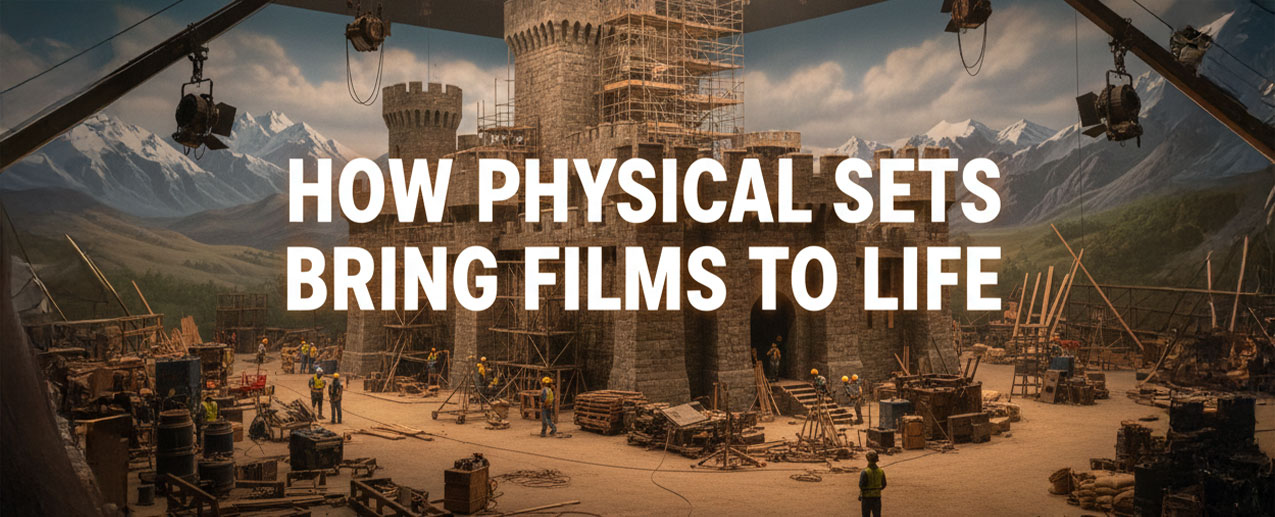

Production design combines architecture, interior design, art, industrial design, and graphic design. Architects and interior designers play an important but often unnoticed role in filmmaking. They plan and organise spaces for film sets, shaping both outdoor environments, such as cityscapes, and indoor spaces. Every set is carefully designed to match the emotions and mood of the story in each scene. Through thoughtful design, they turn written scripts into immersive visual experiences.
Production design is an art form. It is often confused with art direction, but art direction is only one part of production design. Production design focuses on creating sets based on the needs of the film and its story. Since films have many scenes, they require many different types of sets. Actors usually perform on these sets, using props that are part of the designed environment.
Whether it is an action scene or a dramatic moment, visual balance and harmony are created in every set to suit the situation. Designers adjust scale and proportion to match the cinematography. Sets can range from small miniature models to full-scale architectural structures. Every detail is planned so that the space looks powerful and convincing on screen. Production designers carefully arrange furniture and other elements to guide the viewer's attention. They also use color strategically to enhance storytelling. Visually striking and contrasting sets are created to fit the storyline and achieve the desired impact, strengthening the theme and emotional depth of the film.
To create realism, production designers begin their work early in the pre-production stage by preparing mood boards. Every element within the frame, whether physical or digital, is thoughtfully layered to create an atmosphere that supports the emotions of the scene. Lighting, material choices, and colour psychology all contribute to building the overall mood of the film. Today, many production designers also focus on creating sustainable and eco-friendly sets to improve environmental responsibility within the industry. Each location and setting is carefully selected and styled to evoke the intended mood and emotional response from the audience.
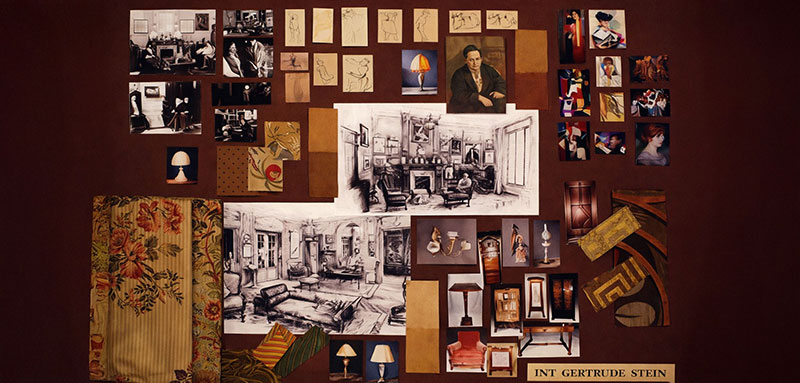
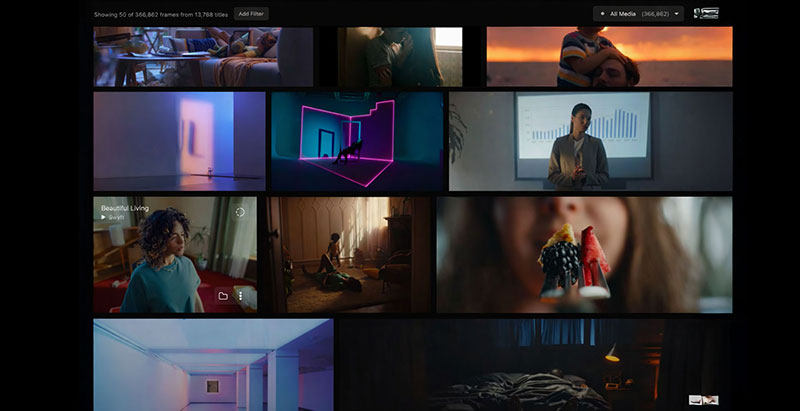
Figure 1 & 2. Examples of mood boards.
Generally, a mood board consists of the director's vision and is produced by the director's team but later to pinpoint ideas concretely; Production design further enhances the mood board. These mood boards help in understanding the positioning and movement of the actors in and around the set.
Miniatures are then created to rehearse and visualize before the production phase. A miniature is a small model of the original set. This saves a lot of time and budget as complex structures could be pre-planned in terms of colour, shape, and access points for the camera by seeing a small model before constructing it into a huge set.
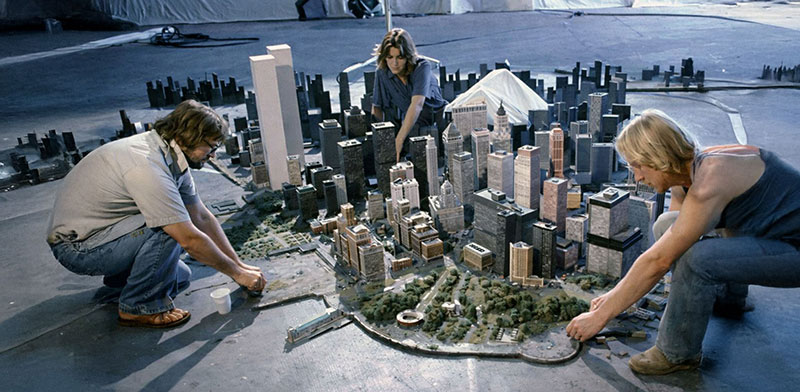
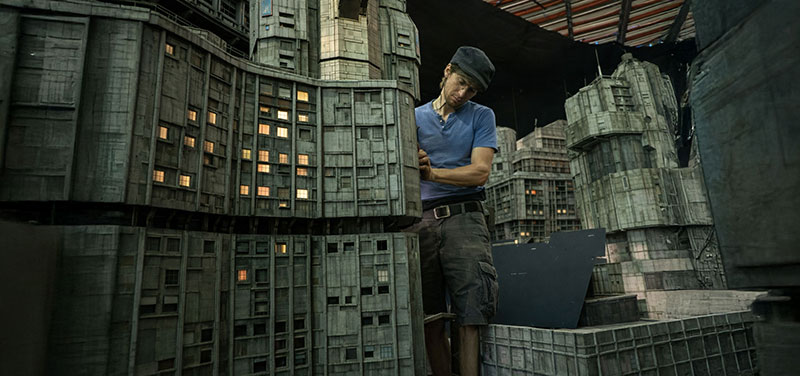
Figure 3 & 4. Examples of miniature film sets.
Production design helps a film to be cinematically consistent in terms of visuals of color, objects, vehicles, the time period of the film, etc. A good film has the consistency so the audience does not get jarred out of reality.
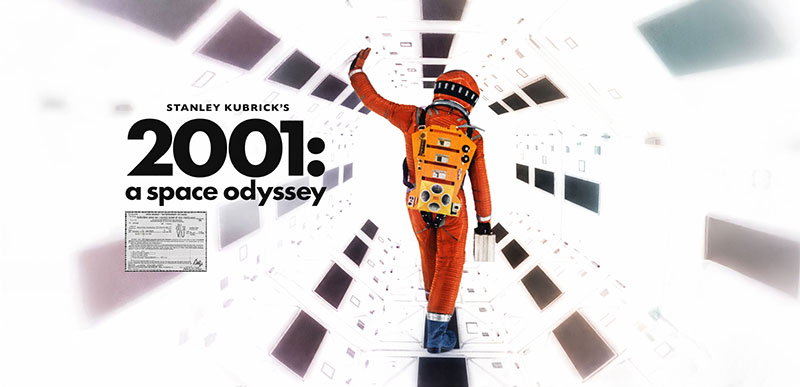
Figure 5. A poster of film '2001: A Space Odyssey'
In 1968, a film named '2001: A Space Odyssey' by filmmaker Stanley Kubrick is a good example of production design. The film's set projects how the future would look through visuals alone, minimising the dialogues. Introducing concepts like video calls, iPad, interstellar travel etc.
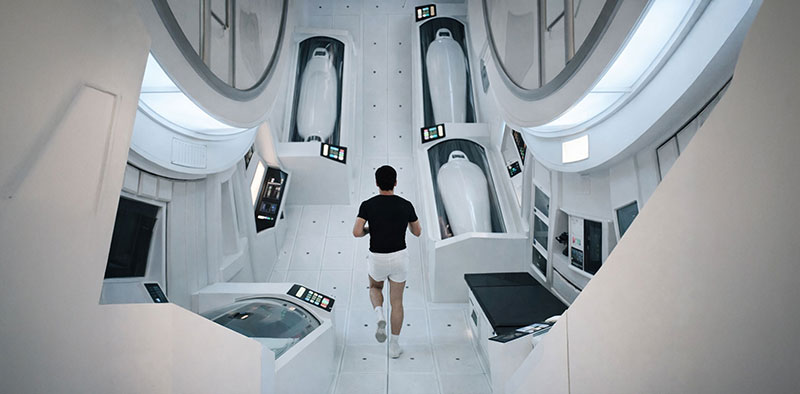
Figure 6. An image of a film set in '2001: A Space Odyssey'.
Another example of production design for a period film is 'Baahubali' directed by S.S. Rajamouli. Though the film extensively used CG there will be some mix and match of miniatures and large sets for war sequences, hero's entry scenes and monuments. The production designers of the film focused on Storyboards and pre-visualisation that help them achieve their visions.
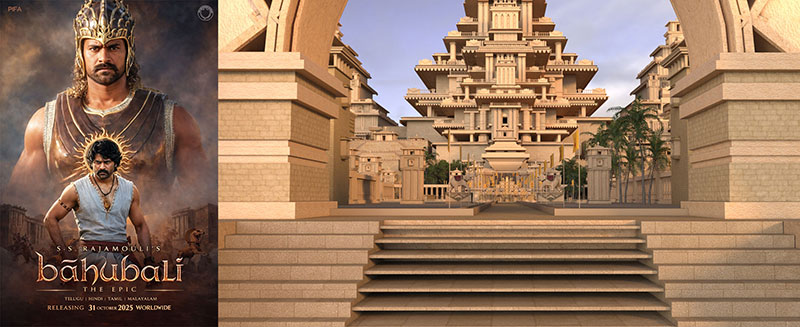
Figures 7 & 8. A film poster and a 3D rendered film set for 'Baahubali'.
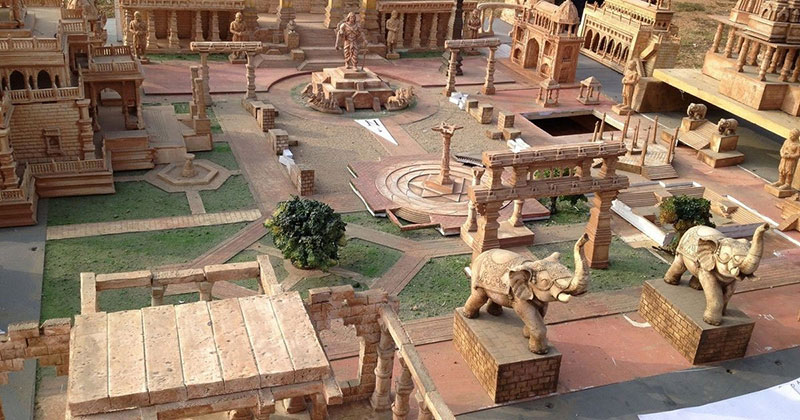
Figure 9. A miniature set for the film 'Baahubali'.
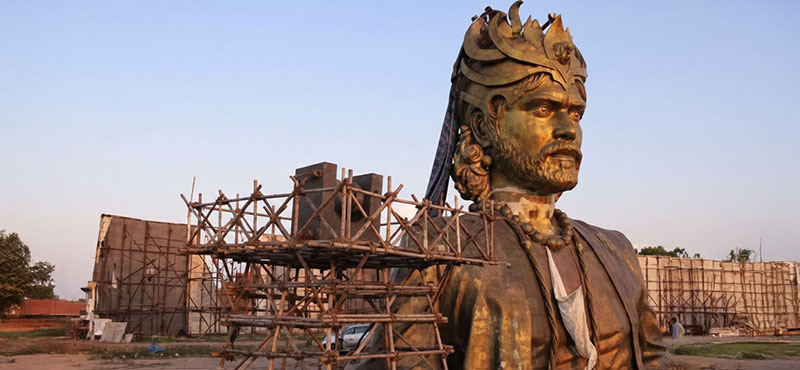
Figure 10. A massive set in Hyderabad for the film 'Baahubali'.
Modern age production houses are breaking the old style of filmmaking, focusing on more sustainable film production. It means the film set designers are now focusing on how they use materials, what kind of materials that cater to environmentally friendly methods. The focus is on recycling, energy efficiency, and less carbon waste. Netflix and other major players welcome such environmentally friendly filmmaking techniques.
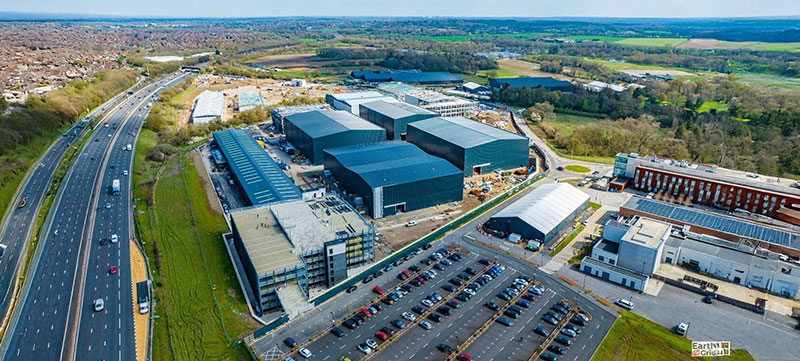
Figure 11. A modern studio focusing on sustainability in Berkshire, UK.
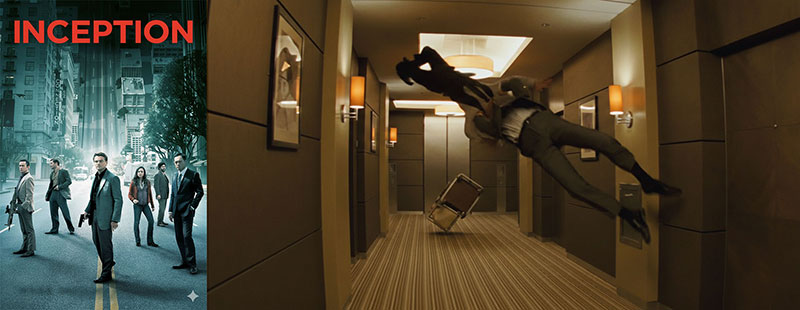
Figure 12 & 13. Shots from the film 'Inception' wherein the actors fight each other in zero gravity.
In 2010, a film 'Inception' by Christopher Nolan, this film had a scene which is famously called "Zero gravity fight". A 100-foot (30-metre) long rectangular circle was created to capture the actors performing stunt sequences inside the structure. The performance was a fight sequence, as the camera was static and the whole set revolved creating an illusion of zero gravity. This is an innovative practical approach without using computer graphics.
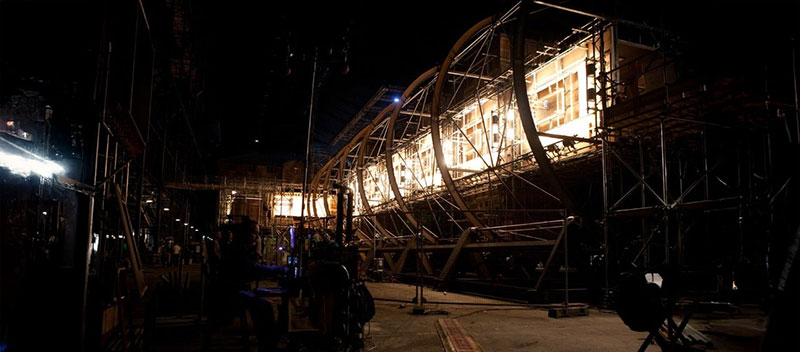
Figure 14. A practical set built for capturing the zero-gravity fight for the film 'Inception'.
Another aspect of the future of production design will be in the emerging field of virtual production, it is a medium where there is a hybrid of capturing the film. Both virtual and real.
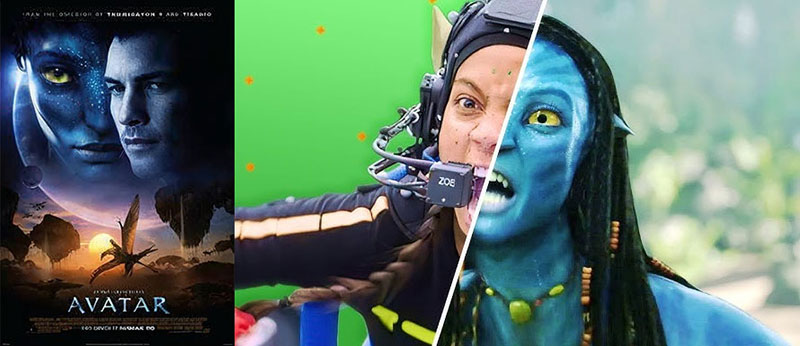
Figure 15 & 16. A poster of the film 'Avatar' and that of a pre- and post-visual.
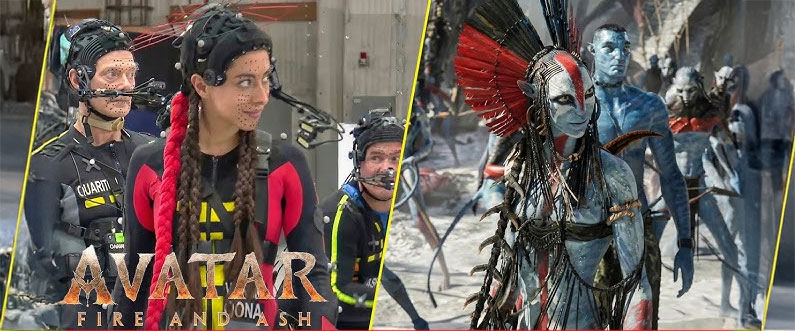
Figure 17. A pre- and post-visual of the film 'Avatar: Fire and Ash'.
In 2008, a film called 'Avatar' directed by James Cameron was released. It is an early stage of virtual production. All the frames that appear in Avatar were captured in a Virtual Set created by 3D software. The actors acted in a live studio, using MOCAP, also known as Motion Capture, a technique to capture their facial expressions.
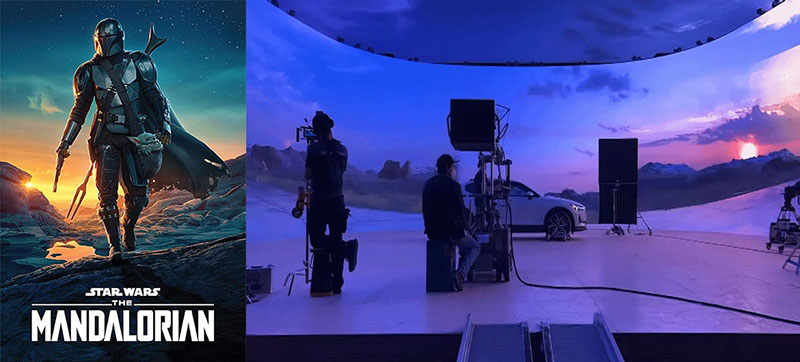
Figure 18 & 19. Images from 'Star Wars: The Mandalorian' including that of a virtual reality set.
A striking modern example of virtual production is 'The Mandalorian'. Instead of acting in front of a green screen, actors performed on a set surrounded by massive LED walls displaying computer-generated backgrounds. This setup, known as volume technology, blended real set pieces and props in the foreground with digital environments behind them, allowing actors to interact more naturally with the world around them.
Archi-tech interventions
As technology moves forward, a new branch of content creation is steadily gaining ground: virtual reality. Unlike traditional cinema, VR frees the viewer from a flat screen and offers a full 360-degree experience. This shift creates fresh challenges for production designers, who must now build worlds that hold up from every possible angle.
Designers have always played a crucial role in shaping cinematic spaces through physical models and sets. Today, advances in design software, 3D visualisation, and high-quality rendering are transforming how these spaces are imagined and built. Virtual sets can now be crafted with far greater detail, realism, and flexibility than ever before.
The future of cinematic design lies in collaboration-where architectural thinking, virtual set design, and physical sets come together. When digital innovation works hand in hand with real-world craftsmanship, it has the potential to elevate the visual language of cinema and redefine how future film worlds are created.
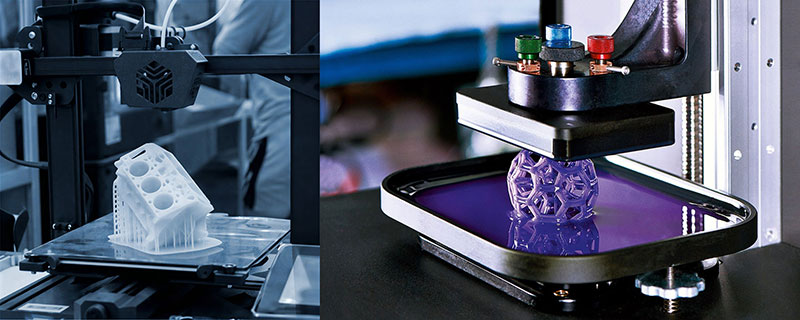
Figures 20 & 21. Miniature pieces of a set are being created in a 3D printer.
Miniature sets are now being created digitally using 3D software such as Maya and SketchUp, and even brought into the real world through 3D printing. Cinema is no longer restricted to physical locations or built sets. Today, highly realistic virtual interiors, cityscapes, and even entire fictional worlds can be imagined and designed with remarkable precision, often indistinguishable from real environments on screen.
Advanced 3D modelling, combined with AI tools, allows filmmakers to shape and reshape environments to suit complex narratives. For production designers, these technologies offer unprecedented control, enabling multiple layers of design to merge seamlessly. The result is richer visual storytelling – where environments are no longer just backgrounds, but active elements that deepen mood, meaning, and cinematic experience.