
The visual effects (VFX) industry in India has transformed dramatically over the past decade, growing from a support service sector into a global creative powerhouse. Today, Indian studios contribute to major international productions as well as ambitious domestic films, proving that the country is not just consuming cinematic spectacle but actively creating it. For students and young professionals, this fast-growing field offers exciting career paths that combine art, technology, and storytelling.
International studios have played a major role in shaping this landscape. Companies such as DNEG, Industrial Light & Magic, and Framestore now operate in India, bringing global production pipelines and high technical standards with them. Their Indian branches do far more than assist overseas teams. Artists here often work on complete shots and sequences for large-scale films, gaining exposure to world-class workflows and tools. This has helped raise both skill levels and confidence among Indian professionals, proving they can compete with the best in the world.
Indian companies
Alongside these global giants, Indian-origin companies have built strong reputations of their own. Prime Focus has become a major name in post-production and visual effects, collaborating on projects across continents. Tata Elxsi blends engineering expertise with creative services, providing VFX and animation for films, advertising, and streaming platforms. Hyderabad-based Makuta VFX is widely admired for its work on epic Indian films, while Red Chillies Entertainment has become a dream workplace for many young artists because of its visually rich productions. The Department of Visual Effects of the ICAT College has placed many students in the VFX industry.
The expansion of the VFX industry is also evident in newer companies making bold global moves. Phantom Digital Effects has grown rapidly through international acquisitions, and Basilic Fly Studio has drawn attention by partnering with well-known overseas houses. Such developments signal that India is not just a service hub but an emerging leader shaping the future of digital entertainment.
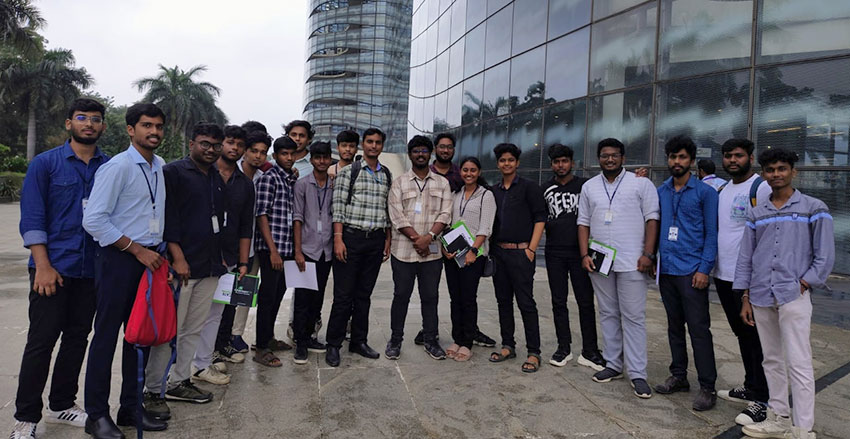
Students on a visit to the VFX studio PhantomFX to gain insights into visual effects.
For students visiting these studios on industrial tours, the experience can be eye-opening. They see firsthand how ideas evolve from rough sketches to fully rendered cinematic shots. They also learn that VFX is not a single job but a complex pipeline involving many specialised roles. A VFX artist might design explosions or fantasy creatures, while a compositing artist blends multiple visual layers into a seamless frame. A 3D modeller builds digital objects, a lighting artist adds realism, and a colourist fine-tunes the final mood. Supervisors oversee entire sequences, ensuring every detail matches the Director's vision. Such exposure helps students understand where their interests and strengths fit within the larger production process.
A visit to a VFX studio, therefore, becomes more than just an educational outing. Students observe professional workflows and interact with artists during educational visits to leading studios. It is often the moment when students realise that the fantastic worlds they watch on screen are created by real people using skill, patience, and imagination. For many, that realisation marks the beginning of a professional dream – one that could place them at the heart of cinema's most spectacular visuals.
Tight production schedules
The glamour of the industry comes with challenges. Production schedules are often tight, and teams must meet strict deadlines set by film studios and streaming platforms. This can mean long working hours, especially during final delivery stages. Professionals say the pressure is part of the job, but they also stress that the learning curve is steep and rewarding. Those who stay adaptable and keep improving their skills usually find steady growth.
Salaries in the Indian VFX sector vary widely depending on specialisation and experience. Entry-level artists typically start with modest pay packages ranging from Rs. 2.5 lakh to Rs. 4 lakh a year, but earnings rise significantly as they build expertise or move into senior creative or supervisory roles. Many professionals also branch into related fields such as gaming, virtual reality, advertising, or immersive media, where their skills are equally valuable.
Industry experts often advise students to focus on fundamentals rather than chasing trends. Strong drawing skills, an understanding of light and colour, knowledge of film language, and a sense of storytelling remain essential. Equally important is technical proficiency. Learning industry-standard software such as Houdini, Maya, Nuke, or Unreal Engine can greatly improve job prospects. A well-crafted demo reel that showcases a student's best work in a specific area is often the key to landing that first opportunity.
Networking helps
Networking is another important step. Festivals, workshops, and online forums allow aspiring artists to connect with professionals and recruiters. These interactions not only open doors to jobs but also help students stay informed about new tools and techniques. Since technology evolves quickly, continuous learning is considered a basic requirement rather than an option.
What makes the Indian VFX story remarkable is its speed of growth. In a relatively short time, the country has built a strong reputation for delivering high-quality visual effects at international standards. With global studios investing here and local companies expanding abroad, the momentum shows no sign of slowing. For creative students who enjoy both art and technology, this industry offers a rare chance to work on projects seen by audiences around the world.