
When you talk about "set design" in films, you are entering the magical celluloid world and helping to create a rich viewing experience. A set is the setting (environment) in which the story takes place – the physical space where a scene is filmed. It can be built in an enclosed space such as a studio or created outdoors. In both cases, it plays an important role in storytelling and in bringing the director's vision to life.
Set design is the process of creating locations or celluloid environments that define the place, period, and atmosphere of a story. It helps create mood, reveal character, establish time and setting, and support the film's narrative. In this way, set design enhances the overall visual experience of a film.
As an audience, we are transported into different worlds. A period drama takes us back to a specific moment in history, made believable through sets that focus on historical accuracy and recreate the aesthetics of that era. Science fiction films, with their futuristic imagination, transport us to entirely new worlds and push the boundaries of innovation and creativity. Fantasy films carry us into magical realms filled with wonder and myth, offering an otherworldly experience.
All of this is made possible through collaborative teamwork among set designers, set decorators, art directors, special effects teams, and many other crew members. Their work involves extensive research and attention to detail. Set design may include studying fashion and trends, understanding historical periods, capturing the essence of the story, recreating past or existing spaces and objects as needed, and developing idea sketches, graphic illustrations, and product designs.
Why create a physical set?
Sets can sometimes be more cost-effective than filming on location. In other cases, the environment required by the story may not exist in real life. Building a set allows directors to control lighting, camera movement, and actor placement within the space. A well-designed set creates a believable world and plays an active role in visual storytelling, rather than serving as a mere background.
Set design has evolved significantly over time. In earlier days, filmmakers relied on real architectural spaces or built practical sets due to technological limitations. Small-scale models were sometimes constructed for large-scale destruction scenes that could not be filmed safely on location. With the rise of digital technology, sets became a blend of physical construction and digital enhancement. Today, many films use extensive CGI (computer-generated imagery) alongside physical sets. In the future, set design will likely continue to combine physical environments with virtual reality, further expanding the possibilities of storytelling.
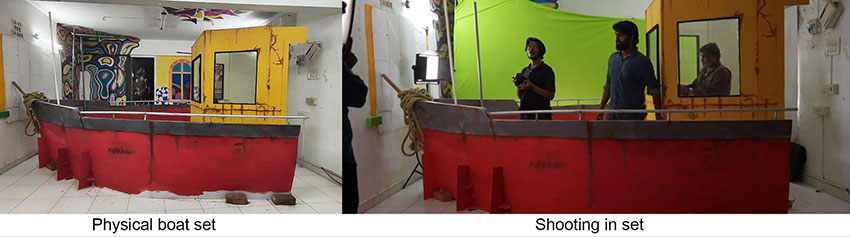
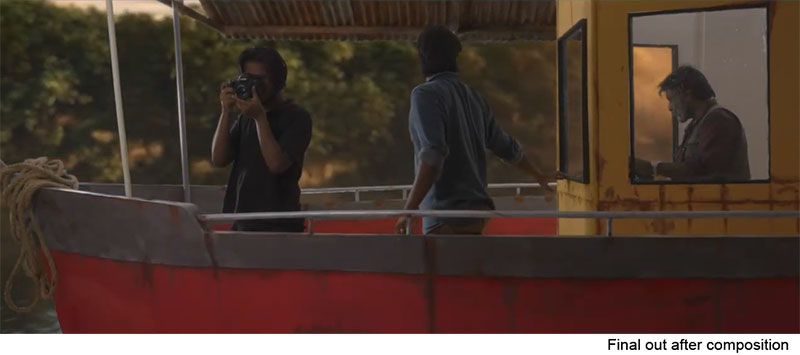
The students of the ICAT College of Design and Media built a physical set of a boat for their project 'Serpent'. This decision was made due to certain shots not possible in real situations. The shots were taken with the help of green screen, then the background was removed, and replaced with computer-generated background to create a desired output.
Conclusion
As films continue to grow with new creative ideas and advanced technology, set design remains an important part of storytelling. It helps create authentic and visually powerful scenes. Set design plays a key role in the overall celluloid experience.
Set design is a creative field with good career opportunities. If you have artistic vision and can combine creativity with practical skills, set design can be a promising career choice.