
Every admission season, I notice a pattern that concern me. Our classrooms for animation, game technology, visual effects, UI/UX, and multimedia are full of creativity and ambition – yet the number of young women choosing these technology-driven creative fields is far lower than it should be.
Why is this so? Is it because these degree programmes are difficult to pursue? Is it because technology is still seen as a "male domain"? Is it because society quietly shapes girls' career choices long before they decide for themselves? Definitely, no. The answer lies not in ability but in mindset.
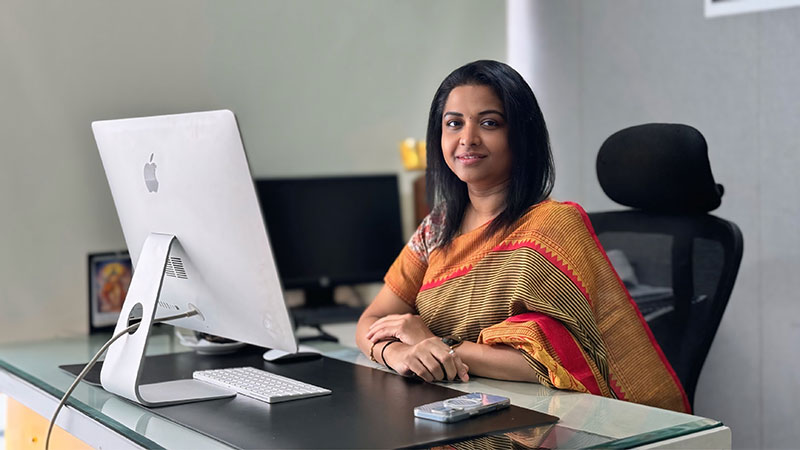
Lakshmi Kumar, Dean, ICAT College of Design and Media
Myths that must be burst
For long, invisible boundaries have shaped how society views women's education and careers. Many young women grew up hearing patriarchal messages such as:
- "Technical fields are complex"
- "Creative technology needs coding and it's tough"
- "Choose something safe"
- "Traditional degrees are more suitable for women."
These may sound like advice, but they often act as restrictions. In many Indian households, career decisions are influenced by familiarity and job security. Parents may prefer common degrees particularly for their female child because they understand them. As a result, women students sometimes begin to doubt whether they belong in technology-driven creative fields, even when they clearly have artistic and analytical talent.
The truth is that design media technology is not about physical strength or gender – it is about creativity, storytelling, problem-solving, and imagination. And these are qualities women demonstrate exceptionally well.
A flexible career
What most families do not realise is that design media technology offers a world of opportunities. Today, a student trained in visual storytelling, animation, VFX, gaming, or UI/UX can:
- Work globally from home
- Freelance independently
- Build a personal brand or startup
- Choose flexible working hours
- Earn from multiple income streams
- Collaborate internationally without relocating
- Enjoy creativity as a profession, not just a hobby.
Unlike traditional career paths, this industry rewards skill, portfolio, and creativity, irrespective of gender. A talented designer can work with studios across the world while living in Chennai, Mumbai, Kolkata, or a small town. It is already happening across India's growing digital economy. In such a scenario, women who have undergone education in design and media technology need not shy away from working because of family responsibilities or societal restrictions.
Why do women still hesitate?
From years of interacting with students and parents, I come to know of three reasons:
Social conditioning: Girls are rarely exposed to technology as a creative tool in schools. It is often presented only as engineering or coding, not imagination and expression.
Lack of role models: India has many successful women in animation, gaming, and UI/UX but their stories are not widely highlighted in textbooks, media, or career guidance sessions.
Fear of the unknown: When families are unfamiliar with an industry, they naturally guide children toward conventional careers they understand.
Thus, it is not an issue of lack of capability but that of awareness.
Design education and women
Design media technology is not a tough subject. It is a skill-based ecosystem where artistic thinking meets digital tools. Learning software is like learning a language or a musical instrument – it becomes perfect with practice.
Women often excel in these fields because they bring:
- empathy in storytelling,
- strong visual sensitivity,
- user-centred thinking,
- creativity balanced with discipline.
For instance, companies actively seek diverse perspectives in UI/UX design. Products designed for only one demographic need in mind rarely serve real users. Women are not outsiders in this industry but they are essential contributors.
Where should change begin?
Parents: Move from asking "Is this safe?" to "Does this unlock her potential?"
Students: Stop underestimating your adaptability. Technology can be learned. Confidence grows with exposure.
Schools: Introduce creative technology early. Animation, digital storytelling, and user interface should be treated as digital literacy.
Colleges: As design educators at higher education, our role goes beyond teaching software. We must actively challenge outdated perceptions, encourage women to step into technology-driven creative spaces, and create environments where talent feels supported.
India's design and media industry is expanding rapidly. Opportunities are not limited but, unfortunately, awareness is. Every time a young woman chooses animation, VFX, game technology, or UI/UX design, she is not just selecting a degree programme but is quietly rewriting a social narrative.
The future of design and media technology needs more voices, more perspectives, and more creators. Perhaps the real question is no longer: "Why are women not entering design media technology?" But rather: "How much innovation are we losing when women don't?"
Young women, do not choose a path simply because it feels expected. Choose one that lets you build, create, and lead. The door is open. The industry is ready. Now society must catch up.