
It's normal for artists to search online for references when working on a new piece. But what if they just copy those references outright? That's not helpful but it kills originality. My goal here isn't to bash AI, but to point out a real risk: the images and designs it generates today could start feeling overused and saturated in just 3 or 4 years. Artists might then need to return to the fundamentals, like sketching by hand with traditional tools, even as technology advances.
A deeper look
If we shift how we view AI, it could actually open doors to more genuine, original creativity. A key part of this is understanding "prompting" — that's the user-written input you type into an AI tool. The AI pulls from vast cloud-based data, remixing existing content to spit out something new. This can be great for quickly visualising ideas to share with peers or clients, but it's not true original creation — it's more like a clever recombination.
Prompting comes in different styles, from simple chats to detailed specs. Some feel as casual as texting a friend on a messaging app.
For example:
"I want a photorealistic, close-up portrait of a cat wearing a detective hat – oh, and add cinematic lighting, plus make it 8K resolution."
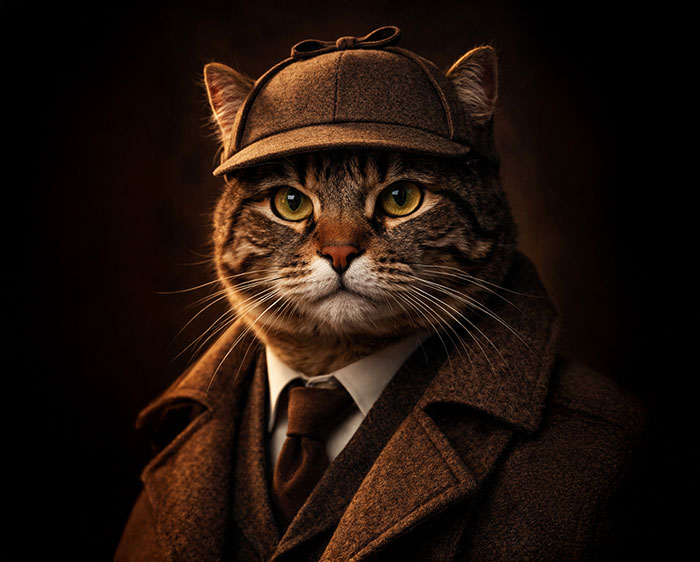
Another type of prompting appears to be like a code, as in a JavaScript.
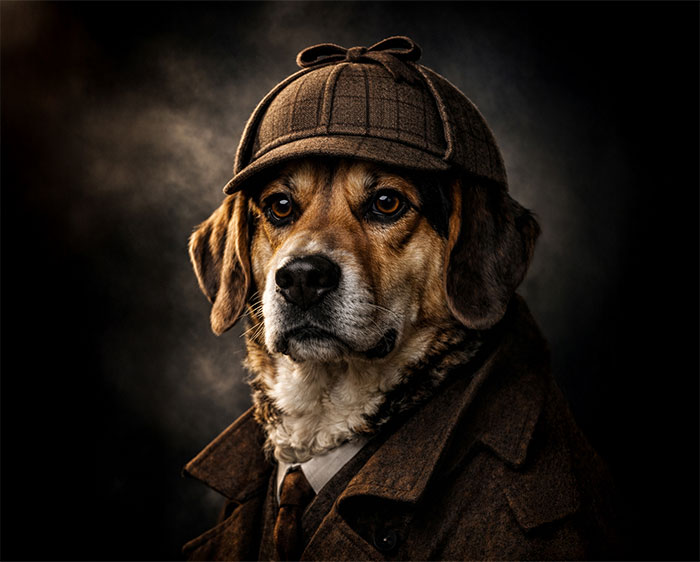
Example 2
{
"Prompt": "A photorealistic, close-up portrait of a dog wearing a classic detective hat (deerstalker), cinematic lighting, ultra-detailed fur texture, sharp focus, shallow depth of field, dramatic shadows, studio composition, volumetric lighting, 8k resolution,"
"negative_prompt": "Blurry, low resolution, cartoon, illustration, distorted face, deformed eyes, extra limbs, duplicate features, noise, grain, watermark, text," "width": 1024,
"height": 1024,
"sampling_steps": 30,
"guidance_scale": 7.5,
"seed": -1
}
AI vs. human creativity
When artists rely predominantly on AI prompt applications like ChatGPT or Gemini, they inherently limit their own artistic potential. This dependency fosters a force of habit that subconsciously suppresses imagination, as creators stop leveraging their own thoughts and instead follow the mechanical instructions generated by the computer. Consequently, this produces unreal or artificial artwork, lacking the organic depth derived from traditional processes.
Traditional artistry thrives on manual iterations and mistakes, which spark new insights and create space for genuine innovation. In contrast, AI's core function prioritises error avoidance and perfection, stifling the very essence of creativity that flourishes through trial, error, and correction. Even if AI generates something like a spoon-feeding book for kindergarten students, after 4 or 5 iterations, its output reveals repetitiveness in context and content – rephrasing the same viewpoint through algorithm-bound instructions. A human dedicating three days to a creative project, however, delivers far superior and more efficient results unbound by such constraints.
Hallucinations and limitations
AI algorithms, obsessed with perfection, rarely permit the mistakes essential for sustaining creativity or fostering new innovations unless explicitly prompted with sensitivity. Occasionally, AI hallucinates wildly, as in the example where it suggested using white glue instead of cheese in a pizza recipe, simply because both appear white. These flaws underscore how AI falls short in nuanced, inventive thinking without human oversight.
In today's market, creativity is dictated by client demands for speed over depth. A decade ago, substantial creative work required at least a week or three minimum days; now, AI enables satisfactory outputs within half an hour, aligning with clients' needs for rapid turnaround. While this satisfies one side, artists risk bypassing thoughtful imagination, eroding true creativity – though mindful AI use by some artists is growing, offering hope for balance. Icons like Mickey Mouse, Looney Tunes, Tom and Jerry, Popeye, and even modern Chota Bheem were hand-drawn traditionally, achieving mass appeal that digital-heavy cartoons often fail to match, highlighting similar challenges across creative sectors.
The difference
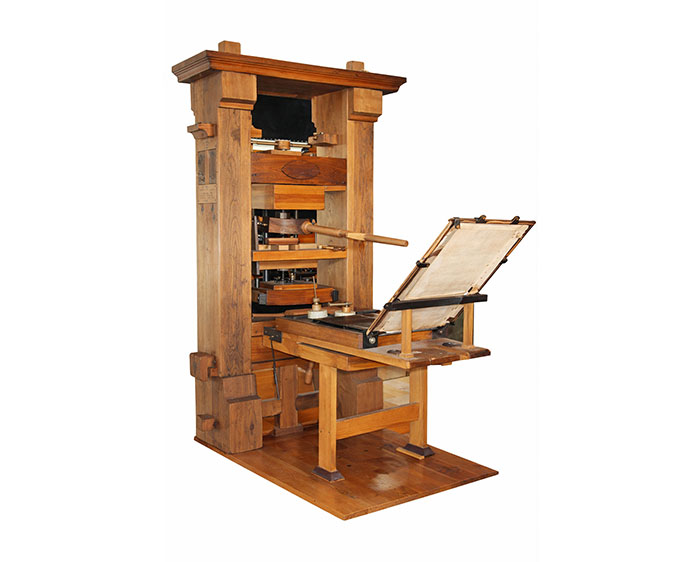
When one looks back to the past, to the age when the first printing machine was invented around 1436—1440 A.D., the Bible and many other social thoughts and short stories began to be recorded.
Today, however, we have greater collective awareness than people did in those times. Many are now able to identify and appreciate different forms of creative ideas. There is a rapidly growing community capable of recognising original work and distinguishing it from AI-generated content. This offers some hope that creativity can still be protected.
Summing up
Nobody wants to talk about it, perhaps out of guilt about overusing or relying too much on AI. Yet technology itself is not the problem. Before mobile phones there were telephones; before television there was radio. Likewise, AI is often seen as just another tool. But the reality is more complex: AI is reshaping thought processes on a mass scale and may soon influence many life decisions. The risk to creativity may be real. However, by carefully examining how these changes unfold, we can still safeguard art and support future creators.